
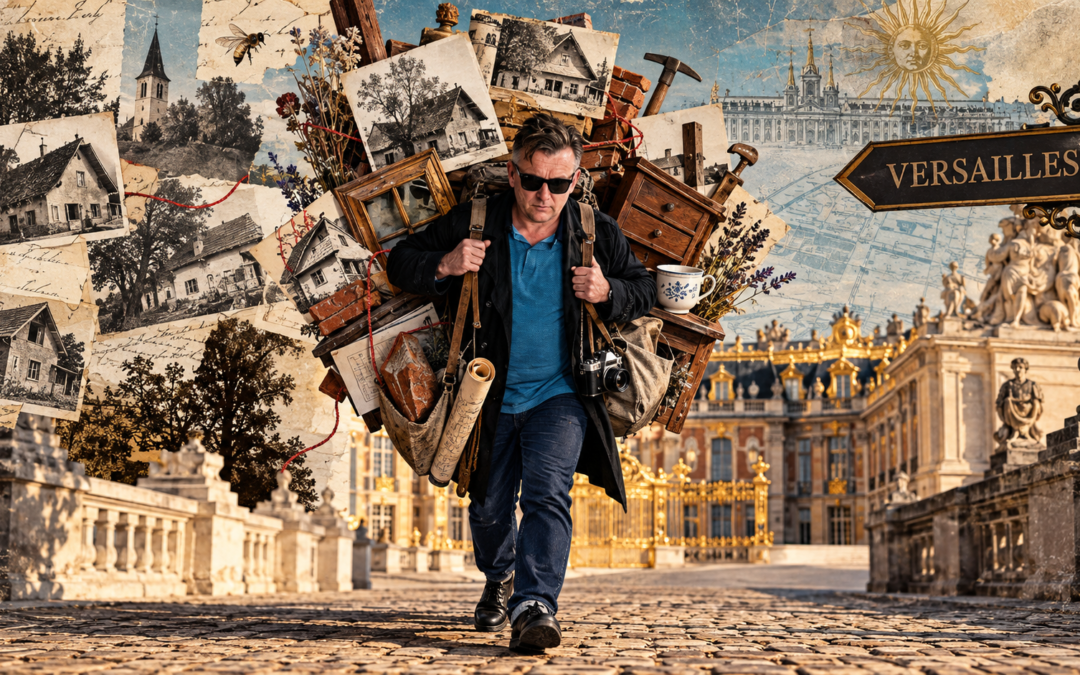
Bringing Forgotten Houses to the Palace of Kings
Sometimes life as a house museum nerd takes you to unexpected places. Old cottages, forgotten attics, abandoned kitchens, dusty cellars. Places where most people see little more than peeling plaster, broken windows and furniture nobody wants anymore.
And sometimes, apparently, it takes you to Versailles.
Yes. Versailles!
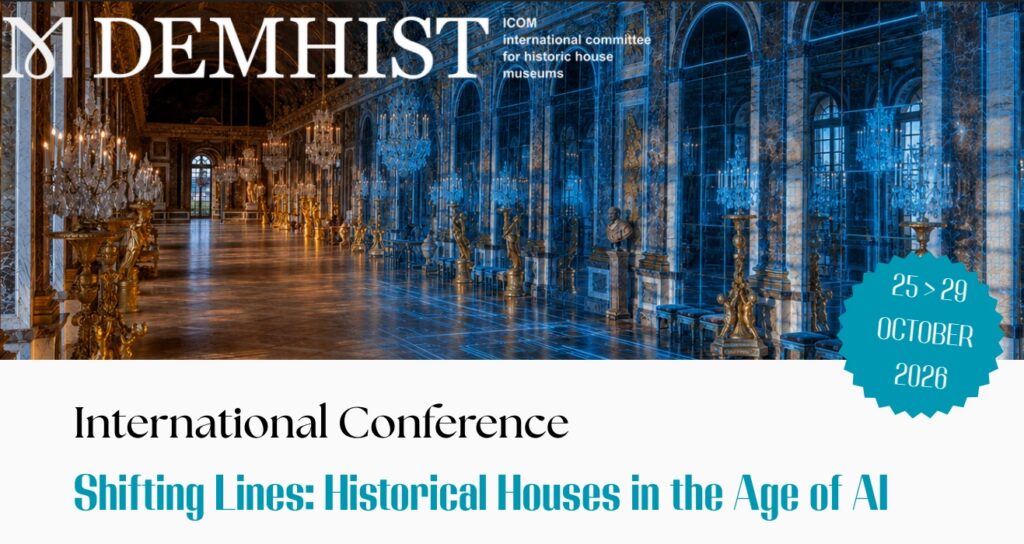
Next week, I’ll be presenting our Heritage Hunters project at the ICOM DEMHIST 2026 International Conference Shifting Lines: Historical Housesinthe Ageof AI in Versailles, France, organised by the International Committee for Historic House Museums (DEMHIST), part of the International Council of Museums (ICOM).
For those unfamiliar with the wonderful world of museum nerds, DEMHIST brings together people from around the world who study, manage, preserve and occasionally obsess over historic houses and house museums.
Basically, my kind of people.
And where are we meeting? Versailles, France. A place with a rather impressive collection of historic rooms, royal furniture and probably more chandeliers than my entire hometown has light bulbs.
For a house museum nerd, it doesn’t get much better than that.
But what makes me even happier is the opportunity to present something that started almost accidentally. Something that was never supposed to become an international conference presentation.
Something that began as a game.
Treasure Hunting for Grown-Ups
It started with a simple idea: what if we went looking for historic houses?
Not famous houses. Not castles. Not the beautifully restored homes of celebrated writers, composers or aristocrats.
Just old, historic houses.
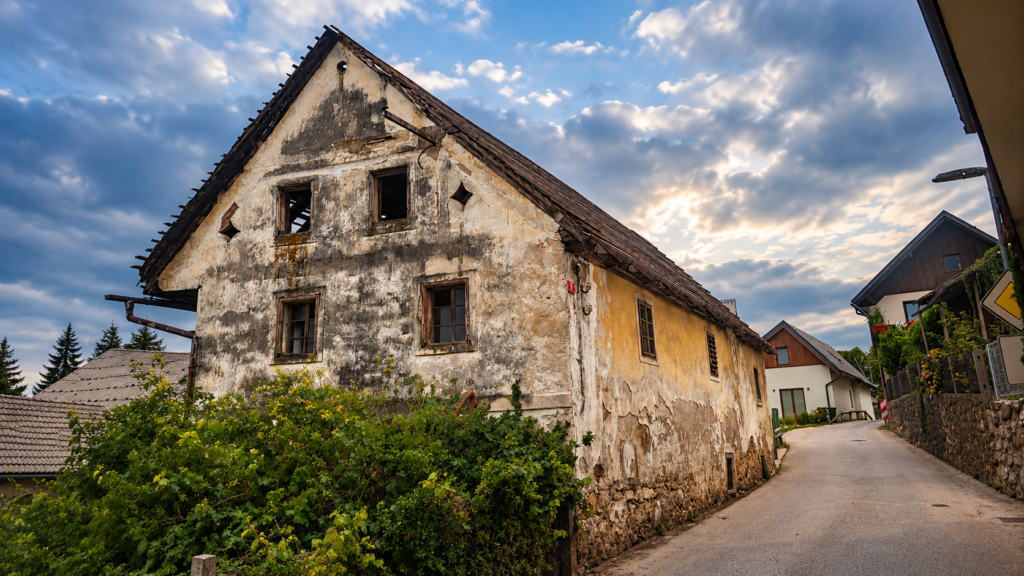
The kind you pass every day without noticing. Historic houses with cracked walls, wooden staircases, mysterious attics and doors that haven’t been opened for years. Houses where generations of people were born, worked, argued, celebrated, fell in love and eventually disappeared.
Some are still inhabited. Others stand empty. Some are falling apart. And a surprising number have never even been recognised as cultural heritage.
So we decided to go looking.
There were four of us. Four people with different backgrounds, countless interests and one thing in common: an apparently incurable fascination with old houses, forgotten objects and the stories they hide.
Rok Humerca is an archaeologist, a passionate lover of cultural heritage and landscapes, and my fellow doctoral student in heritage studies. Aleš Košir is a photographer, filmmaker and something of a Renaissance man, with about a hundred different interests. Anja Bunderla is a painter, conservator, beekeeper and fierce defender of nature, heritage and animals.
And then there’s me. The house museum nerd.
Quite a team, really.
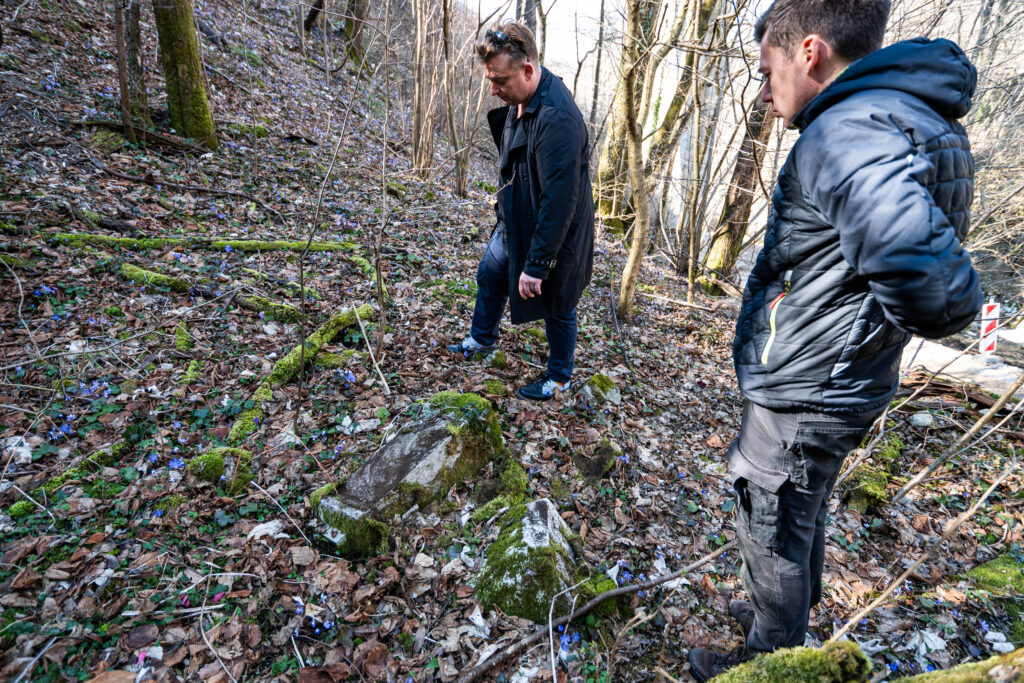
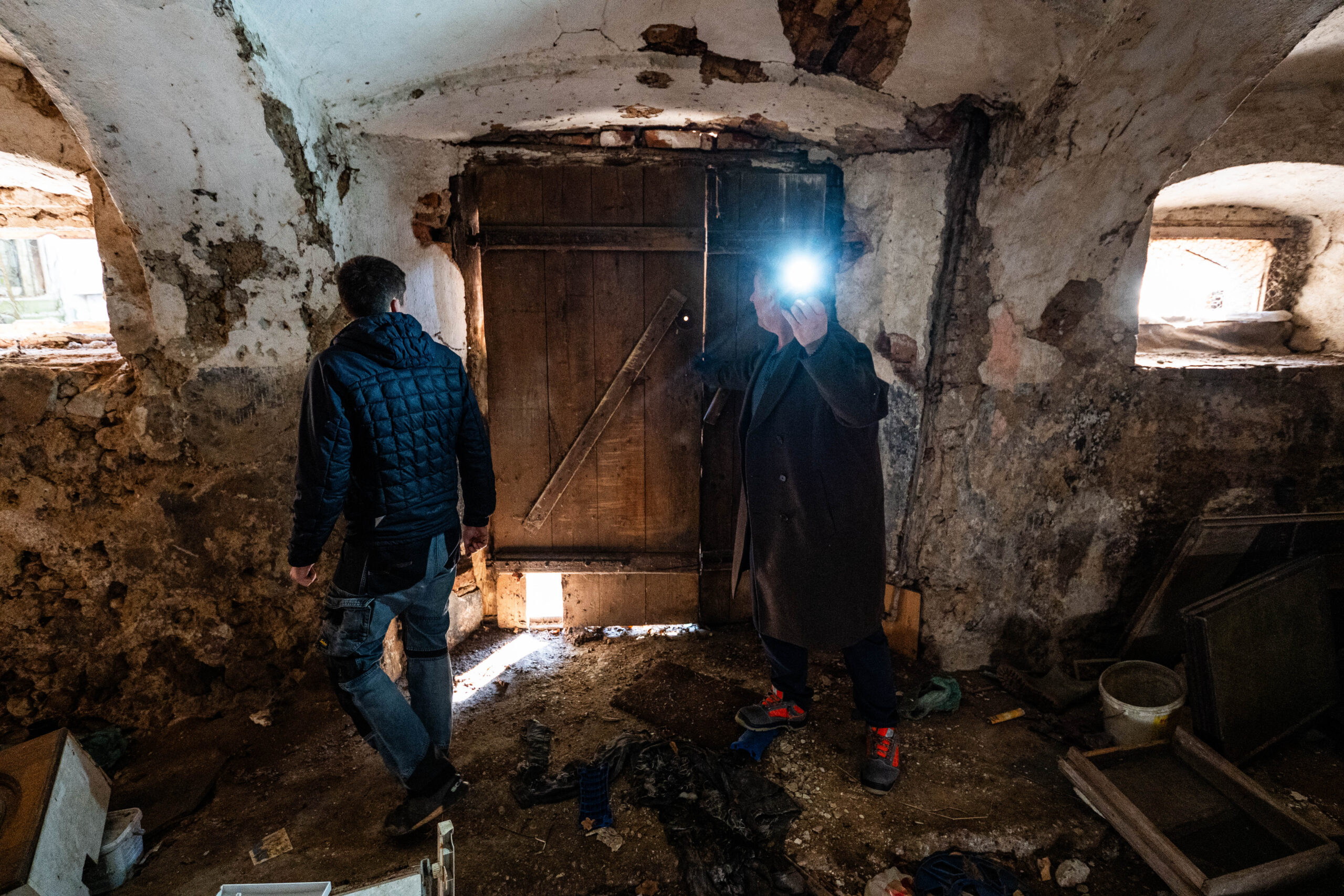
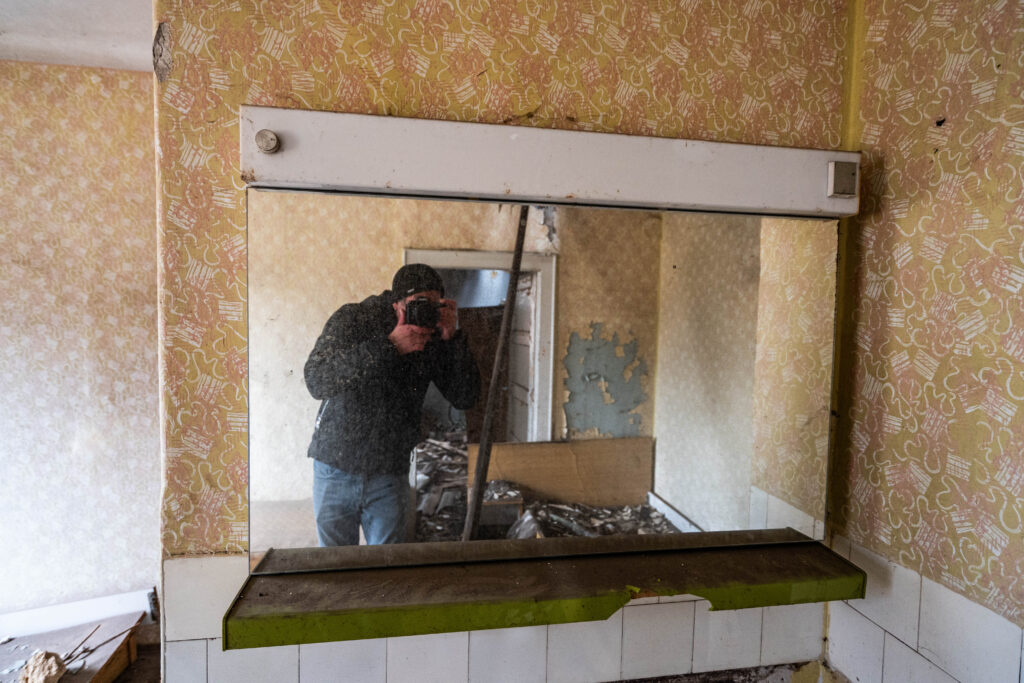
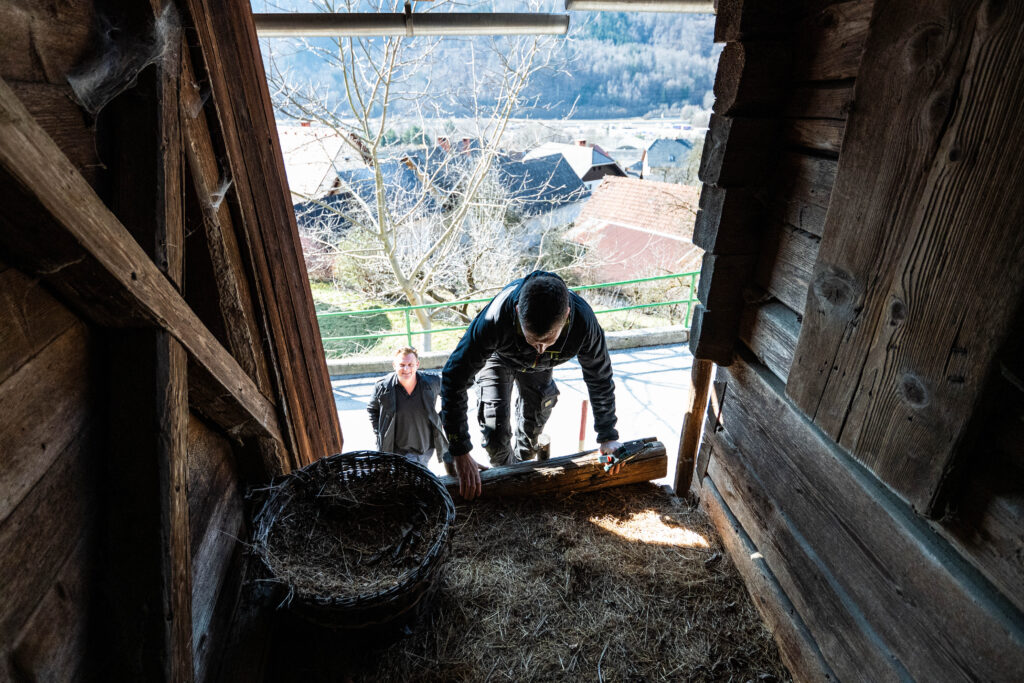
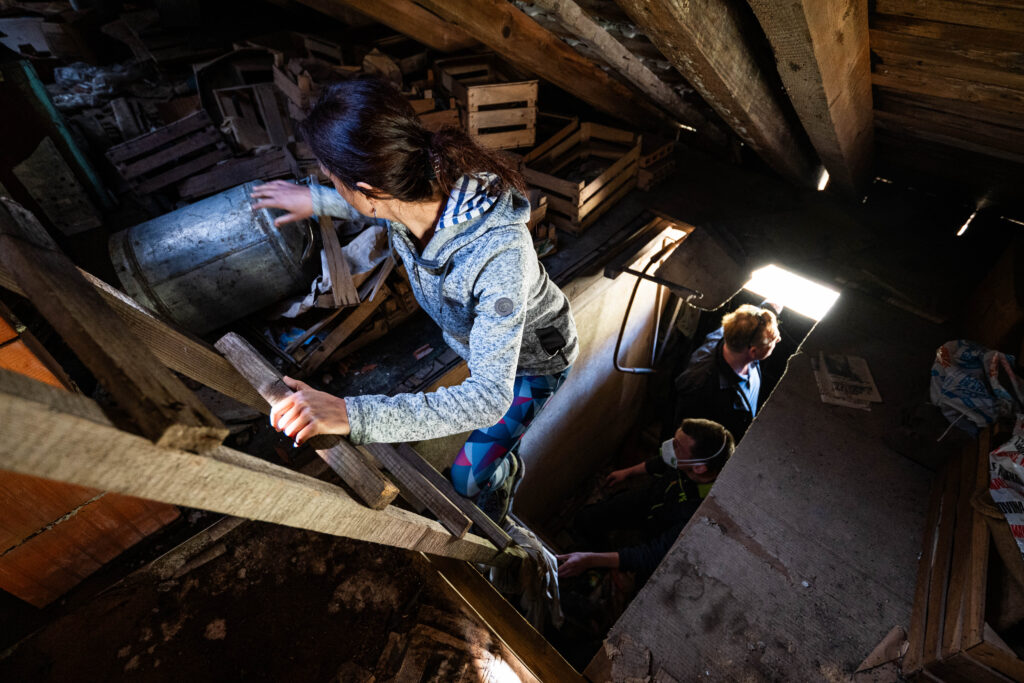
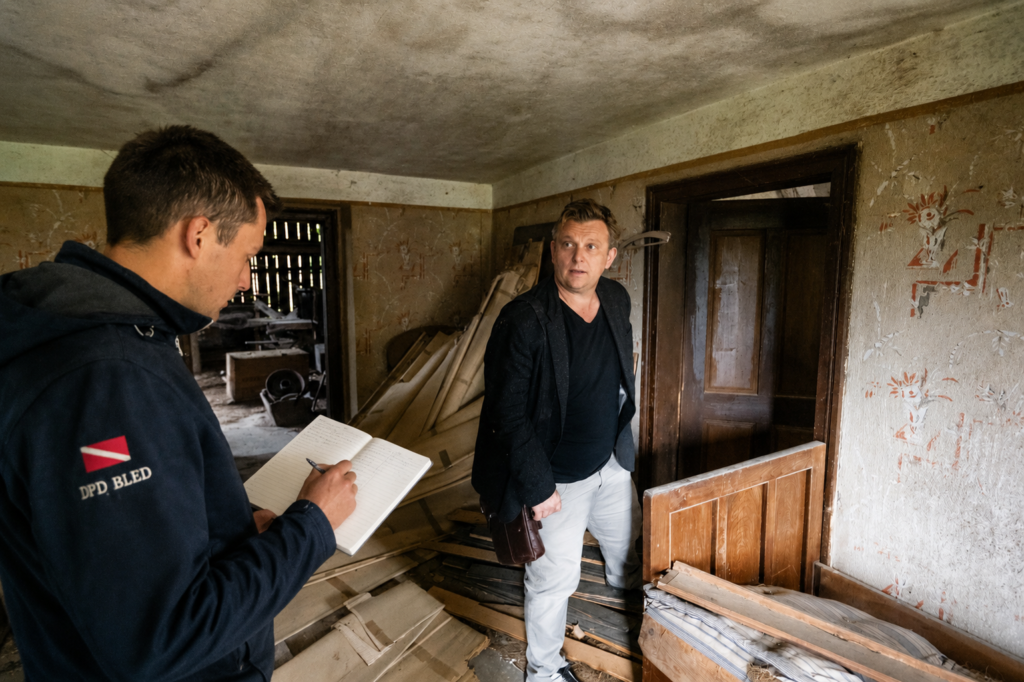
We had a plan. Sort of.
We would find historic houses, talk to their owners, search for historic photographs, document their present condition and collect stories about the people who had lived there.
And perhaps, if we were lucky, discover a few forgotten objects along the way.
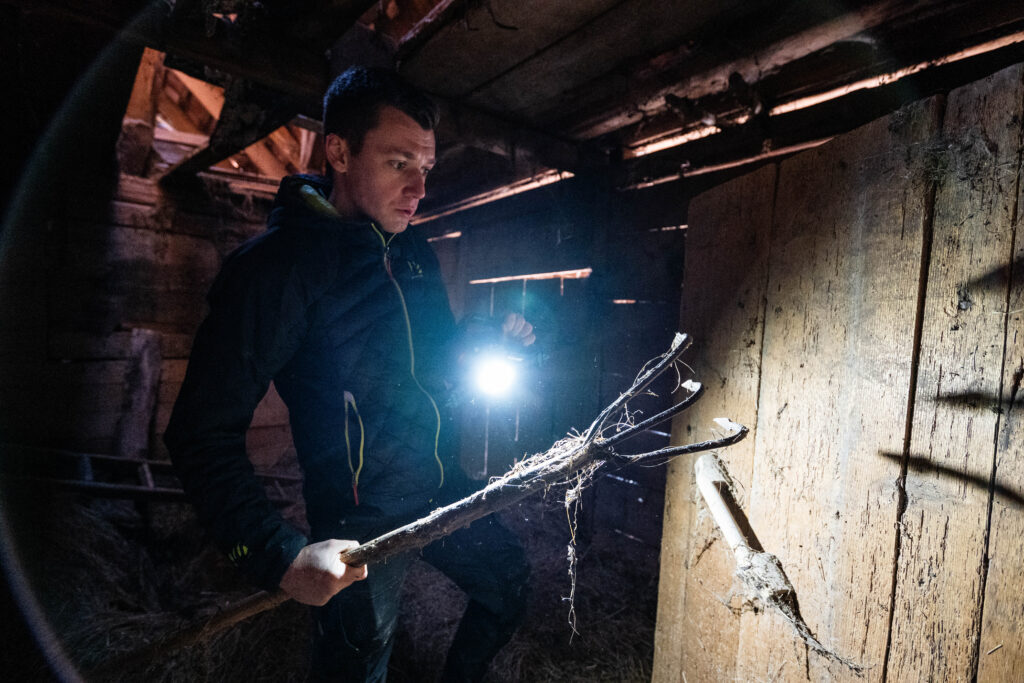
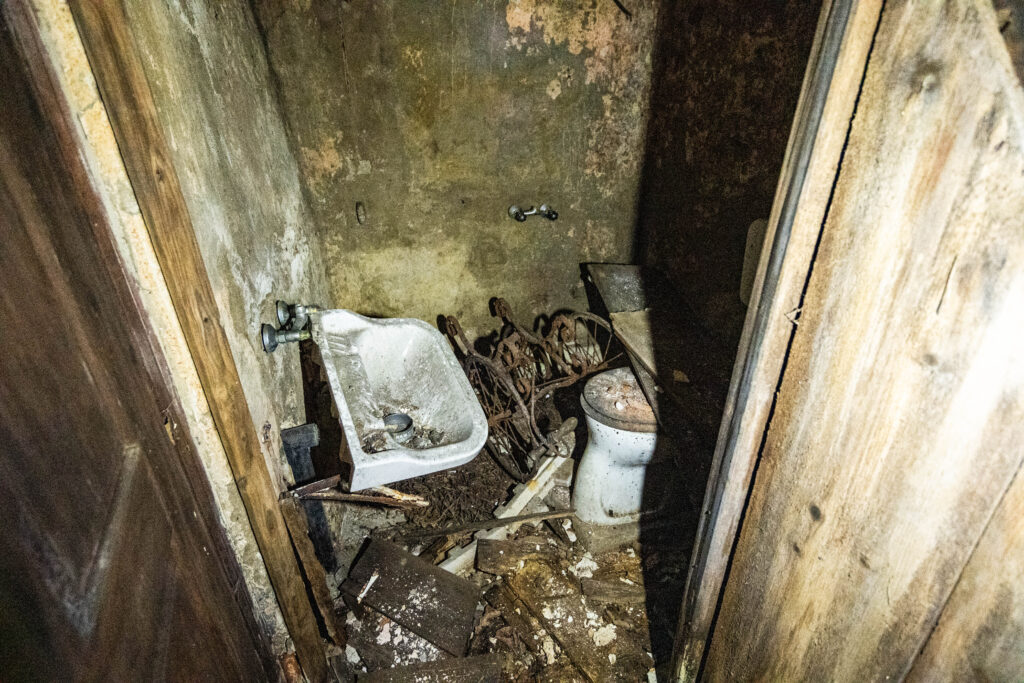
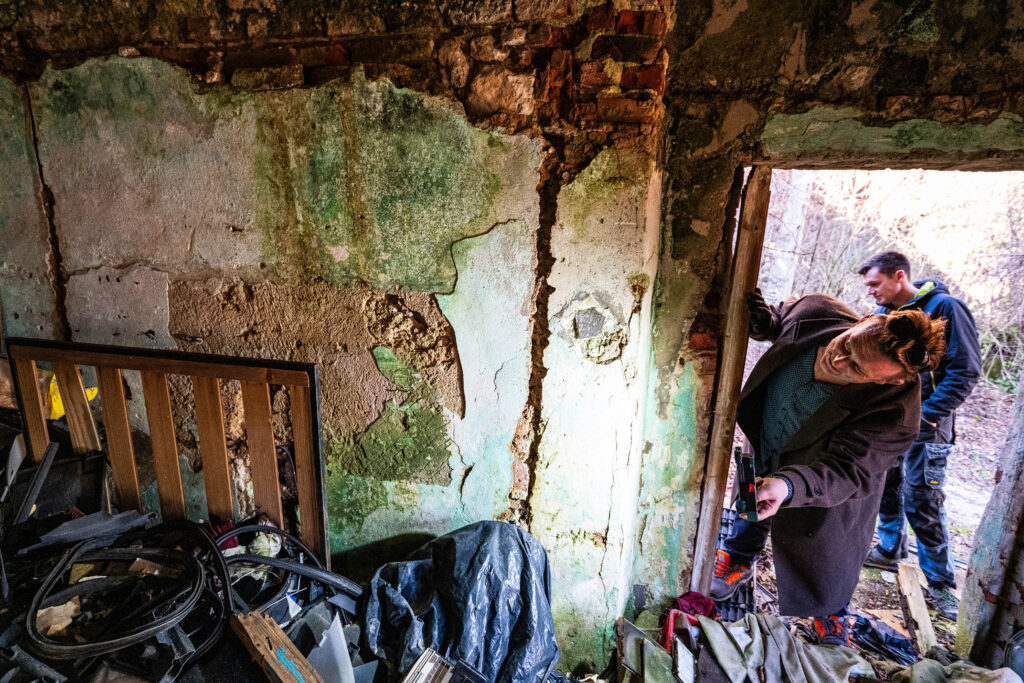
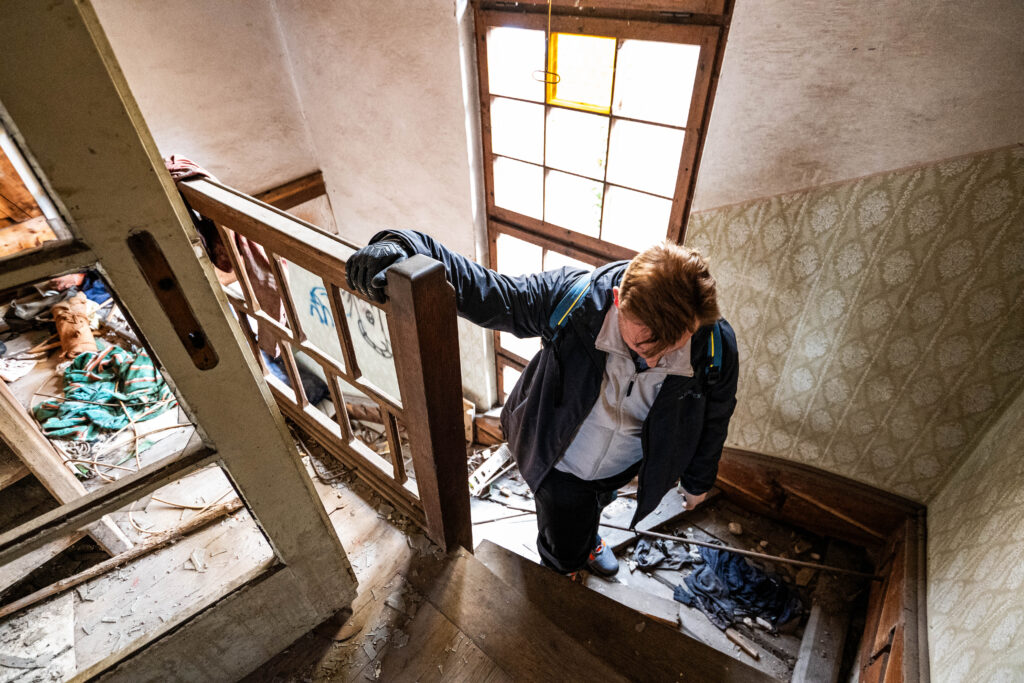
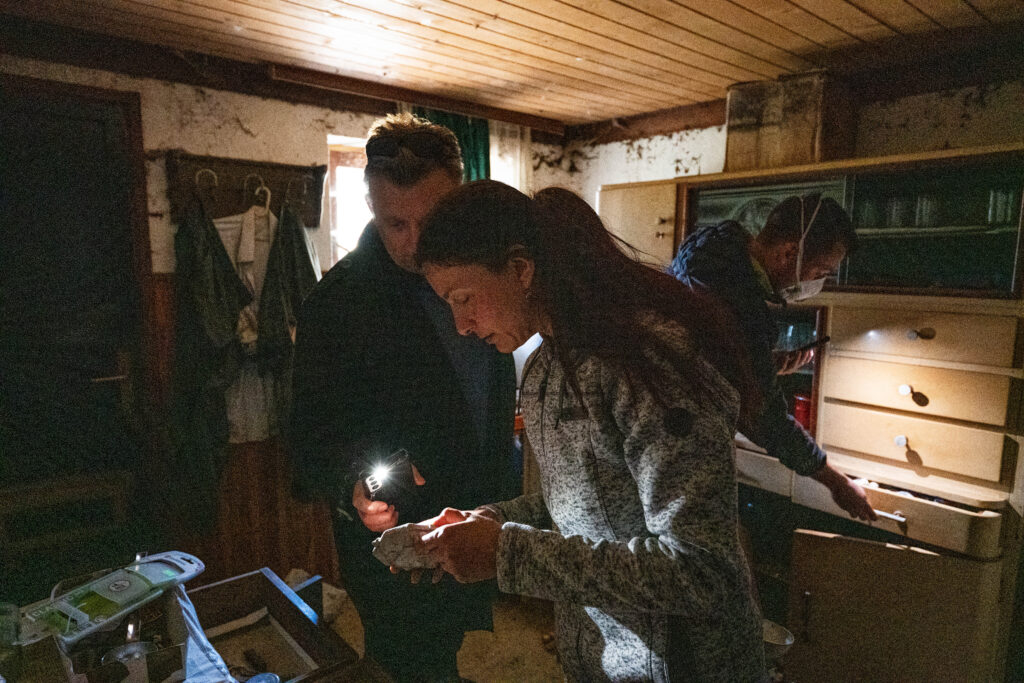
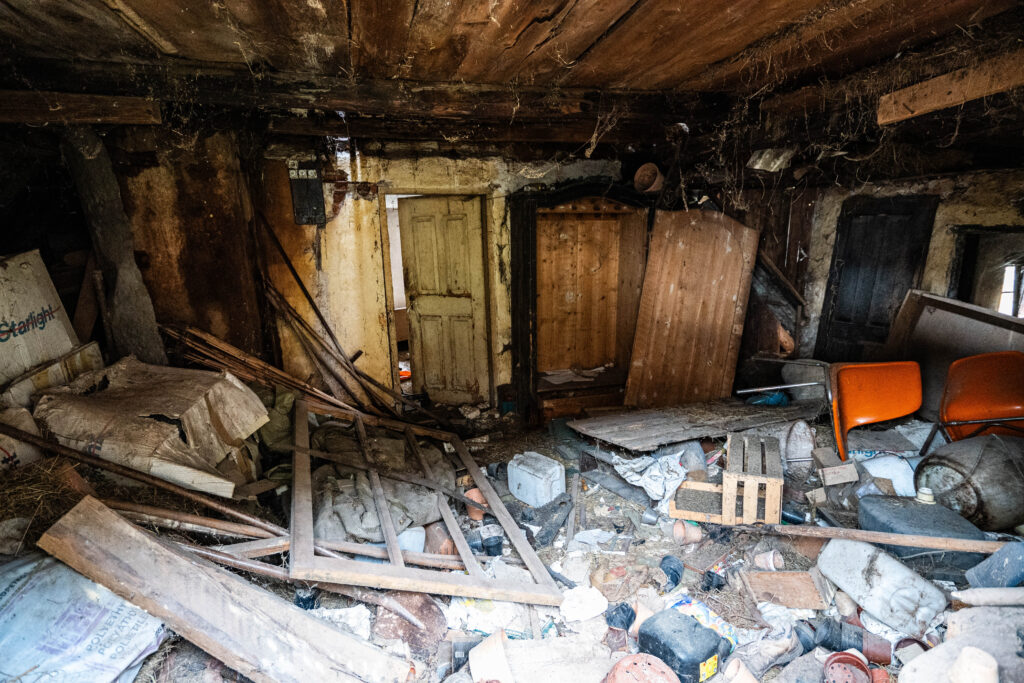
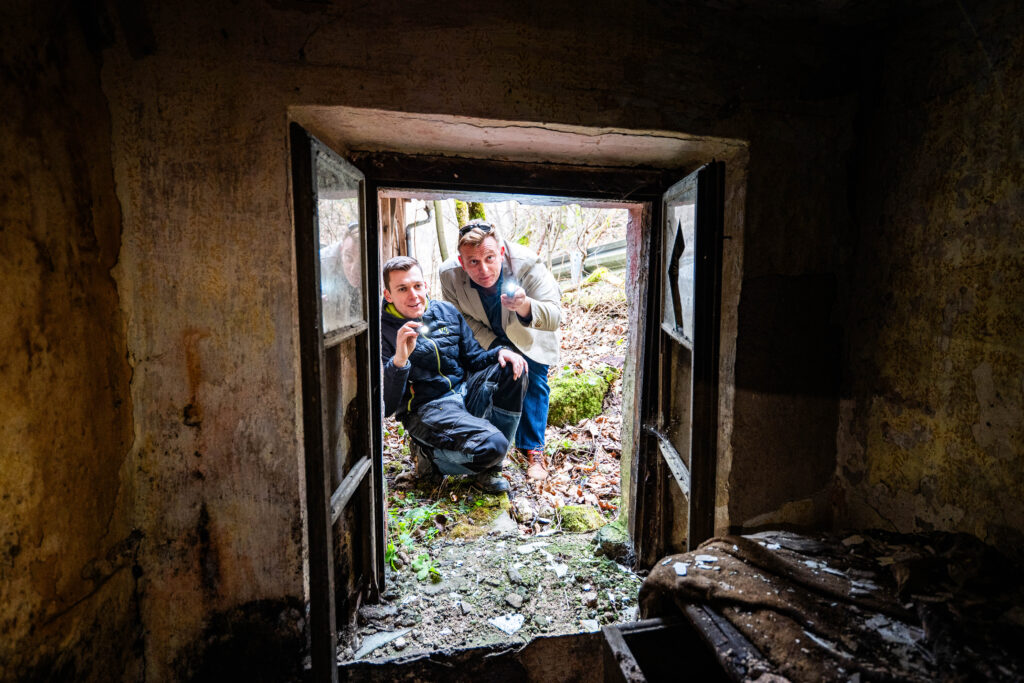
Some of these houses have been abandoned for decades. We climb through dusty attics, explore dark cellars and open doors that probably haven’t been touched in years.
And while we like to imagine ourselves as Indiana Jones, there are moments when we feel a lot more like the Ghostbusters.
Coffee, Memories and Unexpected Treasures
We started knocking on doors around Žirovnica, a small rural municipality in northwestern Slovenia.
Sometimes we were welcomed with coffee. Sometimes with stories. Often with both.
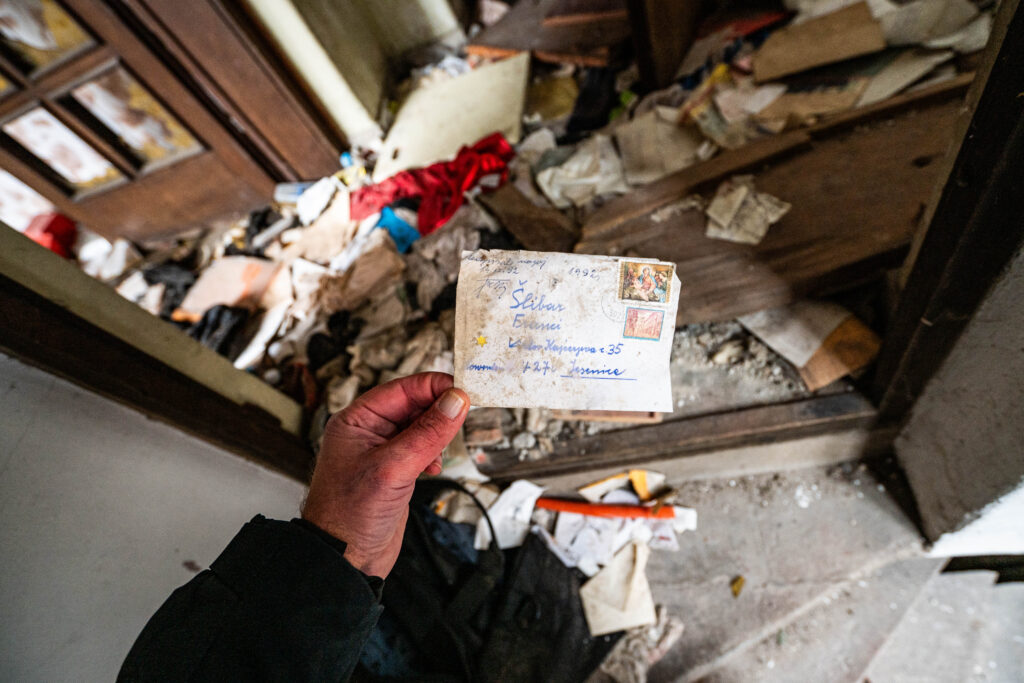
People showed us old family photographs, documents, furniture, tools and household objects that had been lying untouched for decades.
And occasionally, someone would say something like: “You can take that if you want. We don’t need it anymore.”
For us, those moments were pure gold.
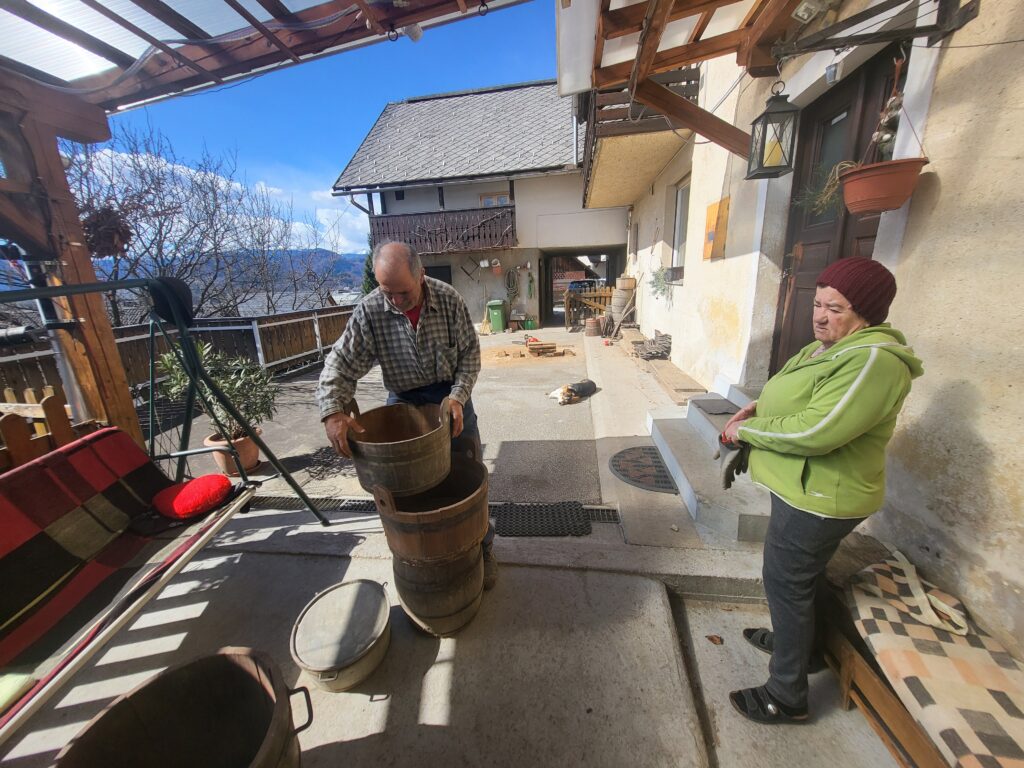
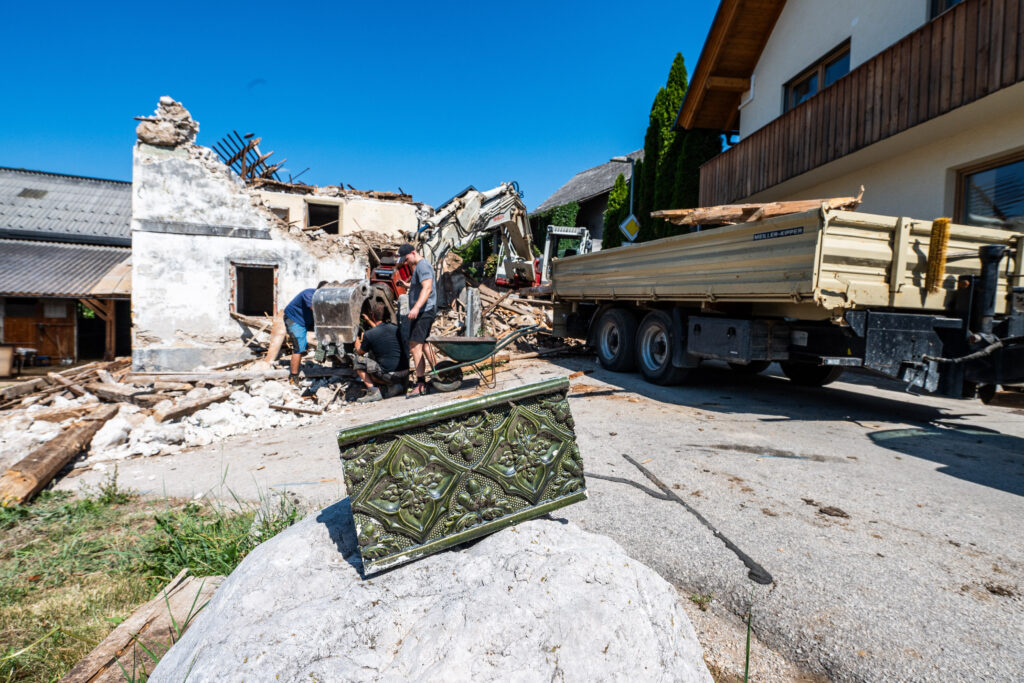
A wooden bucket. An old brick. A piece of furniture. A fragment of a stove. Things that might look insignificant to someone else, but which tell stories about how people once lived and worked.
Before long, we realised we were doing more than simply exploring old houses.
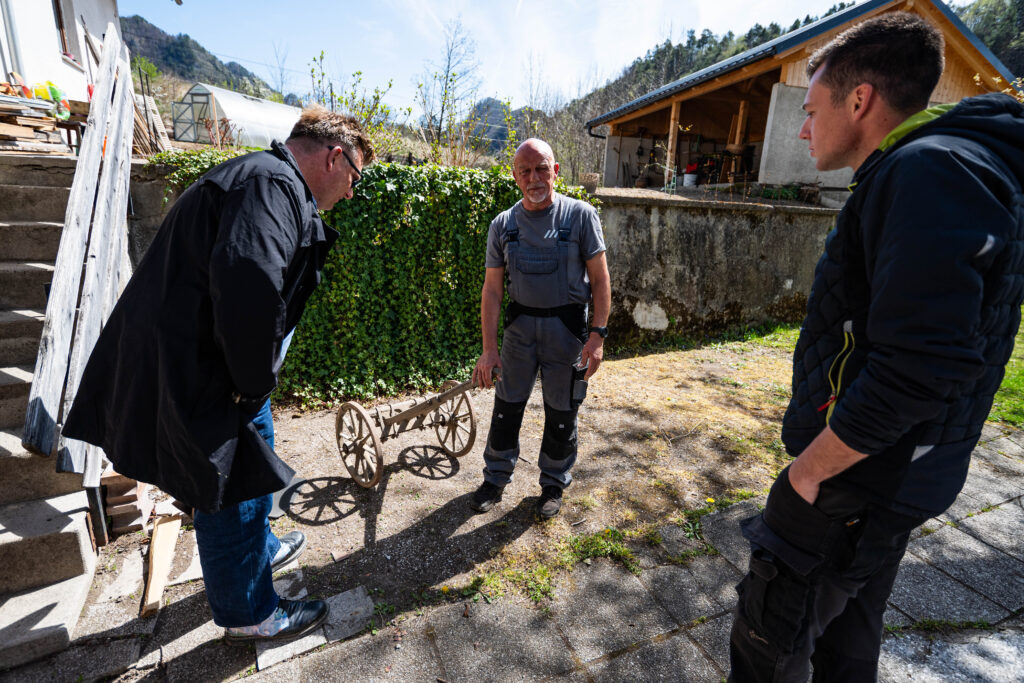
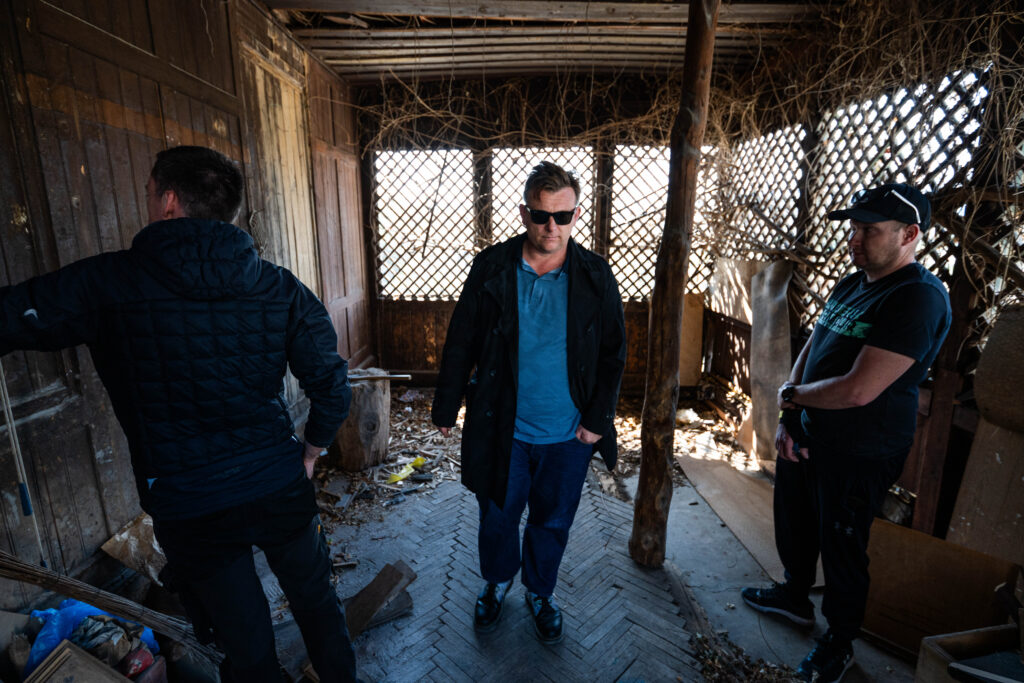
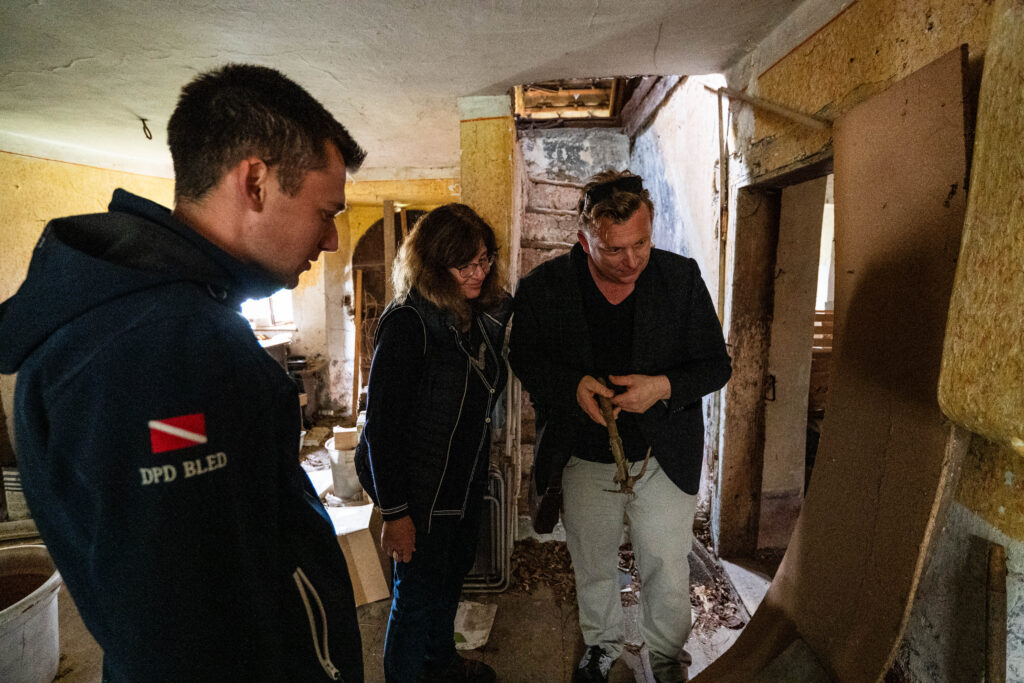
We are building a collection of houses. Well, sort of.
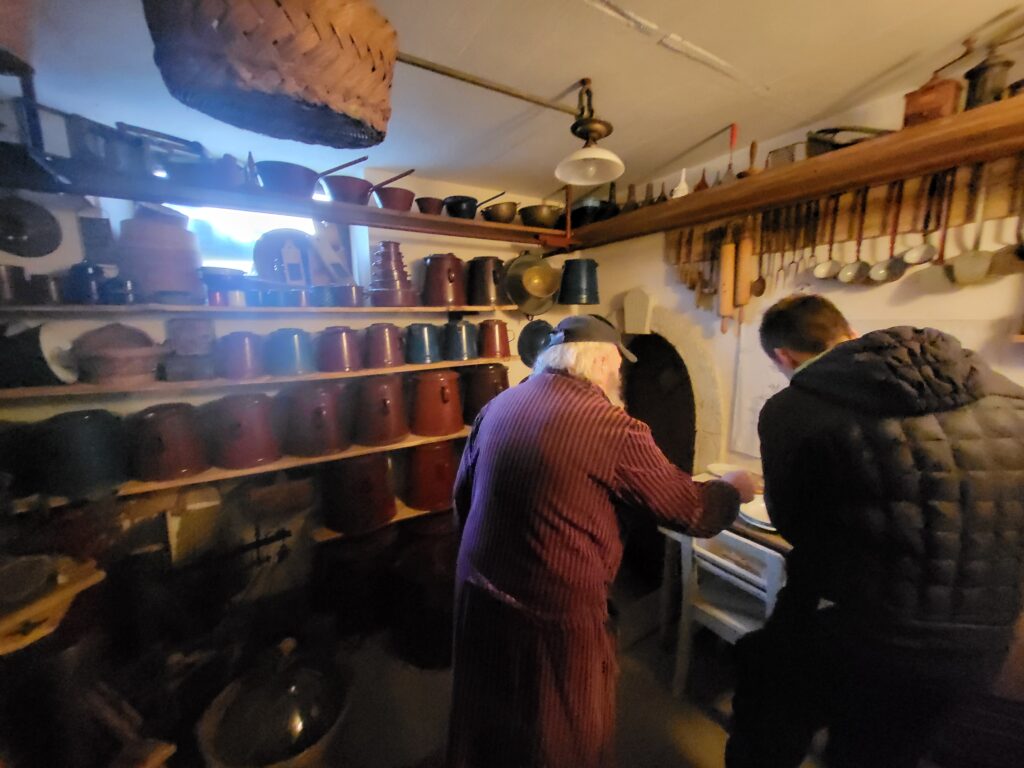
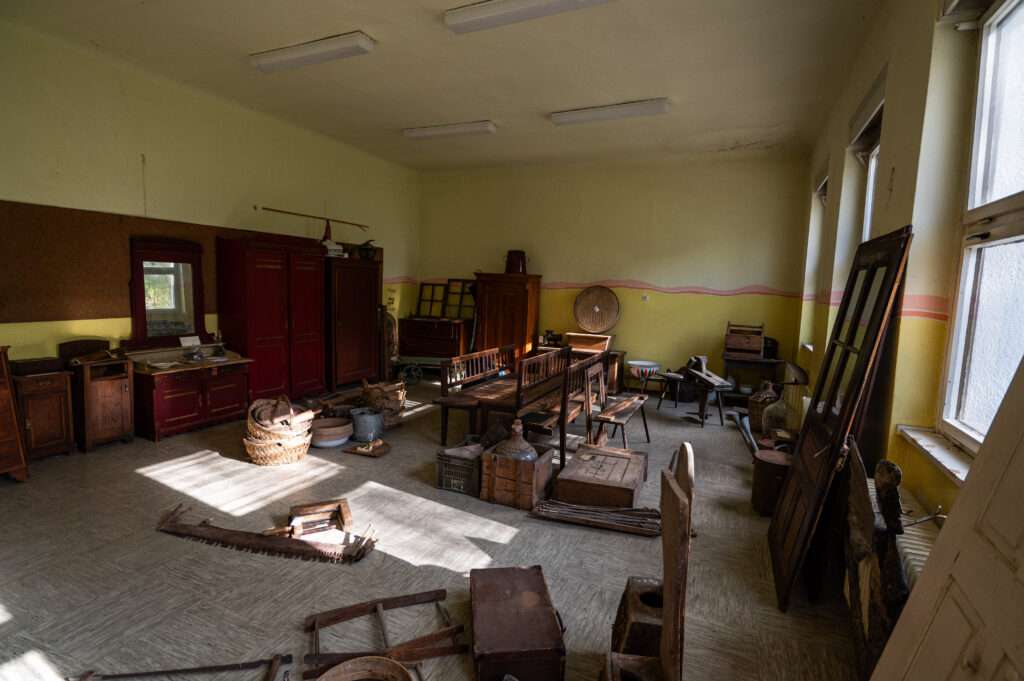
Photographs, archival images, old bricks, roof tiles, cupboards, tools, furniture, everyday objects and, perhaps most importantly, memories. Little pieces of houses and the lives that once filled them.
And here’s the really fascinating part: we often know exactly where these things came from.
We know who drank from a particular cup. Who built a cupboard. Who used a certain tool. Sometimes we even know which forest the wood for an old chest of drawers came from.
These aren’t just anonymous objects rescued from dusty attics. They have names, faces, stories and memories attached to them.
A cup is no longer just a cup. A brick is no longer just a brick. And an old cupboard can tell you more about a family than an entire history textbook.
We’re not collecting houses because we want to own them. We’re collecting their stories, their fragments and their memories.
Because sometimes, when a house disappears, these are the only things that remain.
When Heritage Protection Isn’t Enough
The deeper we looked, the more uncomfortable things became.
We found beautiful historic houses, some dating back to the 17th and 18th centuries. Some had never been recognised as cultural heritage. Others had been officially registered, yet were still left to deteriorate. Abandoned for decades, broken into, looted, slowly falling apart.
Something didn’t quite add up.
Slovenia has heritage protection laws. We’ve even ratified the Faro Convention, which encourages communities to take an active role in protecting their heritage.
Sounds good, doesn’t it?
In Slovenia, anyone can submit a proposal to include a historic building in the Register of Immovable Cultural Heritage. Registration doesn’t automatically make a building a protected monument, but it is an important first step towards recognising its heritage value.
So we rolled up our sleeves.
We submitted numerous initiatives for heritage registration — historic houses, bridges, cultural landscapes and other places we believed deserved recognition. All supported by research, photographs and historical evidence.
And we didn’t do it entirely alone. We had a little help from our heritage friends — people from heritage and nature conservation associations who share our passion for protecting the places and landscapes we love.
And the response?
Silence.
Not a single registration. Not even a substantive reply.
Of course, not every old house can become a protected monument. We understand that.
Surely people who invest their own time and energy into saving local heritage deserve at least a conversation?
Because participation cannot be a one-way street.
If we want people to care about their heritage, we also need institutions that are willing to listen when they do.
Because while we’re busy discussing what deserves protection, some of these houses are simply disappearing.
Out of the Attic, Into the Spotlight
But while we were waiting for answers, something else was happening.
The stories and objects we had collected were beginning to find their way out of dusty attics and into the spotlight.
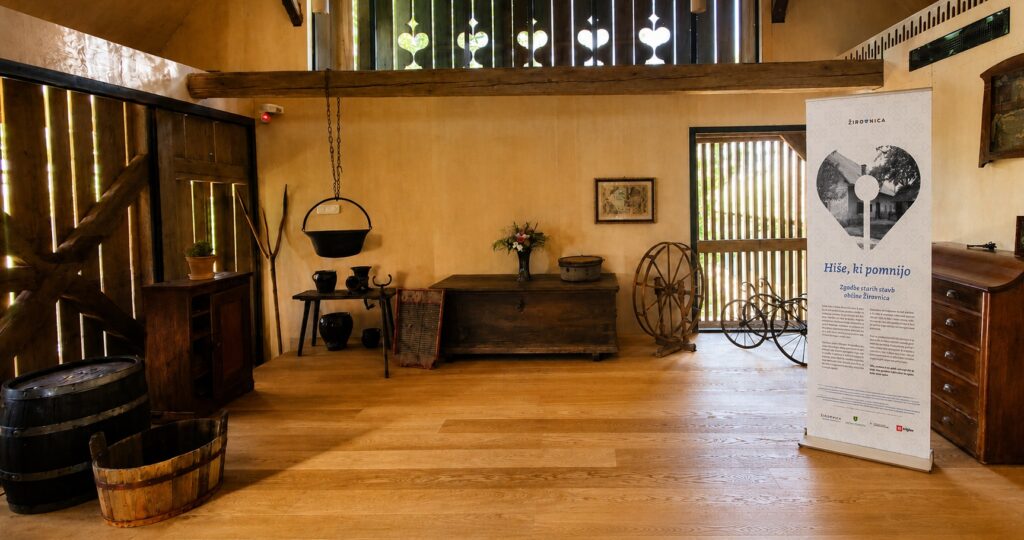
In the summer of 2026, we presented seven historic houses from Žirovnica in an exhibition called Houses That Remember, at Prešeren’s Birth House in Vrba.
None of them would normally appear on a list of Slovenia’s must-see tourist attractions. And that’s precisely the point.
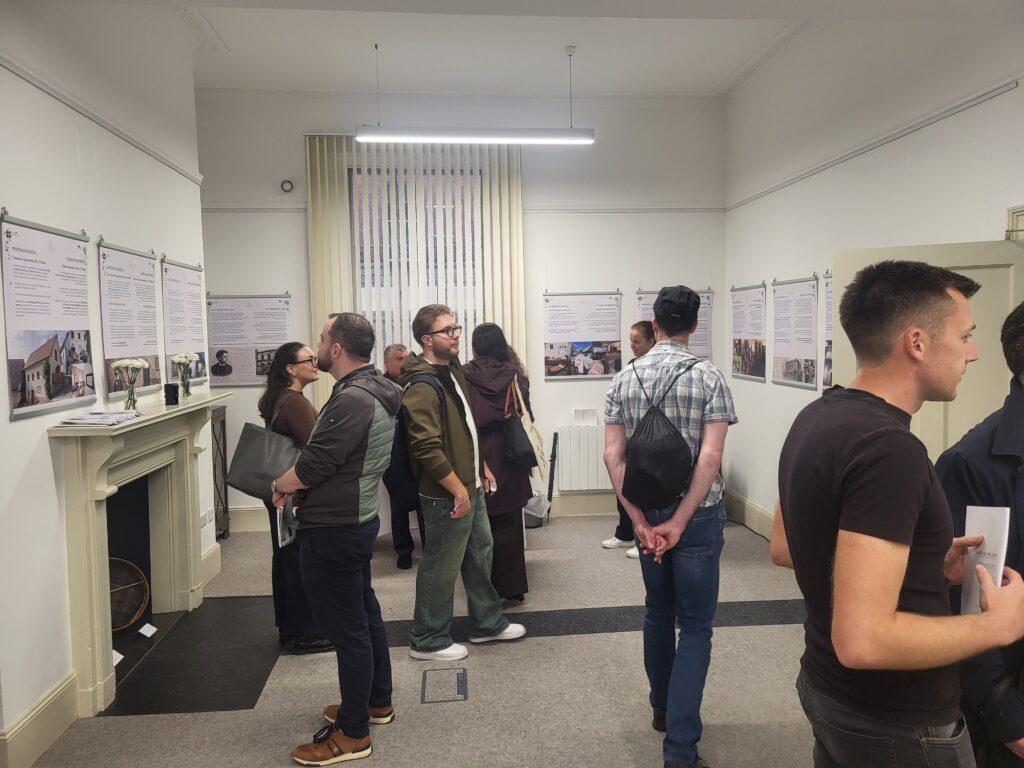
And then some of our collected objects travelled even further — to Dublin, where they became part of House Museums of Language – Slovenia & Ireland, an exhibition that three members of our team helped prepare.


More than 50 people have become involved in our activities since January 2026 — opening their doors, sharing memories, donating objects and helping us piece together fragments of local history.
And together, we’ve visited and documented around 60 historic houses across the region.
And now, next week, I’ll be sharing our story with colleagues from around the world at the ICOM DEMHIST conference in Versailles.
There’s something wonderfully absurd about that.
A project that began with four people exploring forgotten village houses will be presented in a place synonymous with royal splendour.
From dusty attics to Versailles.
Not bad for a treasure hunt.
The Real Treasure
The longer I work with house museums, the more convinced I become that the most important thing about a historic house is not necessarily its architecture, furniture or famous former residents.
It’s the connection between a place and the people whose lives unfolded there.
Sometimes those people were kings, poets or celebrated artists.
And sometimes they were carpenters, railway workers, farmers, innkeepers or families whose names will never appear in history books.
Their homes matter too.
That’s what Heritage Hunters is really about.
We’re going to keep exploring, documenting, collecting and asking uncomfortable questions. We’ll continue submitting heritage protection proposals, raising public awareness and encouraging institutions and communities to act before it’s too late.
And if someone offers us an old wooden bucket along the way?
Well, we’ll probably take it.
After all, you never know where a forgotten bucket might lead you.
Apparently, sometimes all the way to Versailles.
Soundtrack: The Stooges – Fun House
Welcome to the Fun House!
That’s pretty much how we feel every time we step inside another beautiful, crumbling old house.
Forget Indiana Jones. Forget the Ghostbusters. Most of the time, we’re probably closer to The Three Stooges. Except there are four of us.
Four slightly ridiculous treasure hunters, wandering through dusty rooms, falling hopelessly in love with forgotten places. A little obsessed, a little naive, and just crazy enough to believe we might actually save some of these magnificent old wrecks.
Maybe we’ve simply been apart from these places for too long. Forgotten what they meant, who lived there, and why they still matter.
Maybe it’s time we got back together.
Four Stooges. A whole lot of fun houses. And a little hope that some of them might survive.
More Information about Heritage Hunters
Official website: Heritage Hunters – ICOM DEMHIST – Shifting Lines: Historical Housesinthe Ageof AI
Photos: Aleš Košir / House Museum Nerd
Text: Matjaž Koman / House Museum Nerd
This post is part of the Ultimate House Museum Guide for Nerds – a personal project exploring the beauty, strangeness and magic of house museums around the world.