
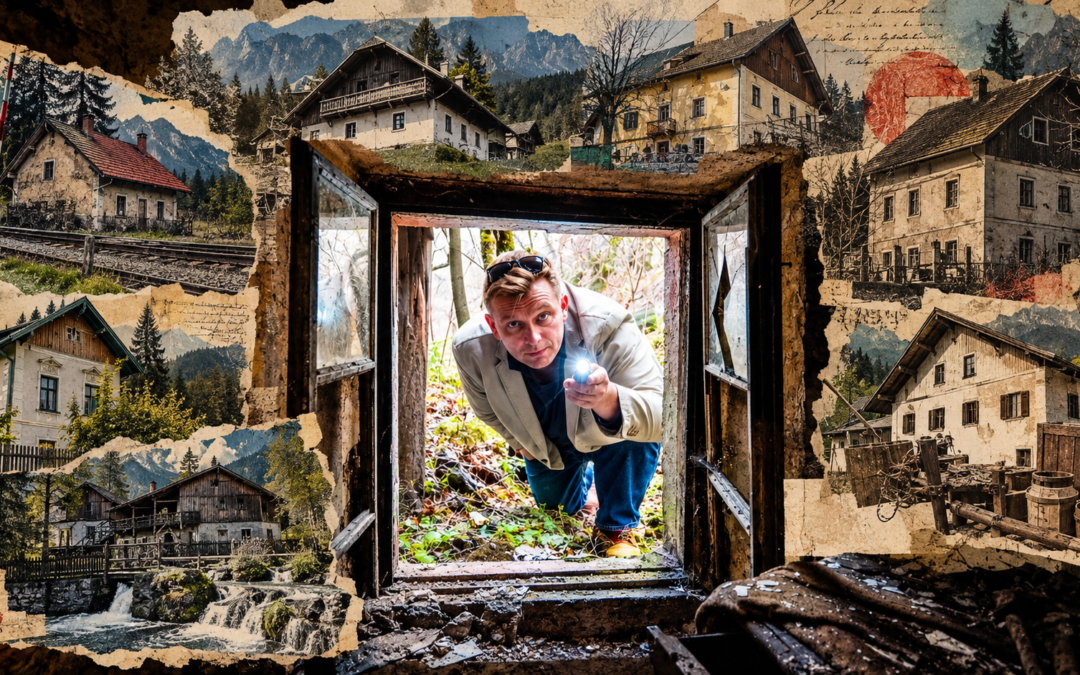
Houses That Remember
Seven old houses that remember, forgotten stories and one meat grinder attached to a milking stool
Houses That Remember is a story about seven overlooked historic houses in Slovenia, and about discovering the hidden layers of Žirovnica heritage through people, objects and memories.
I spend a ridiculous amount of my free time visiting house museums. Writers’ homes, artists’ studios, palaces, workers’ houses, castles, tiny cottages – if somebody interesting once lived there and the house somehow survived, chances are I want to get inside.
But this time I didn’t have to travel anywhere. The houses were right here, in Žirovnica.
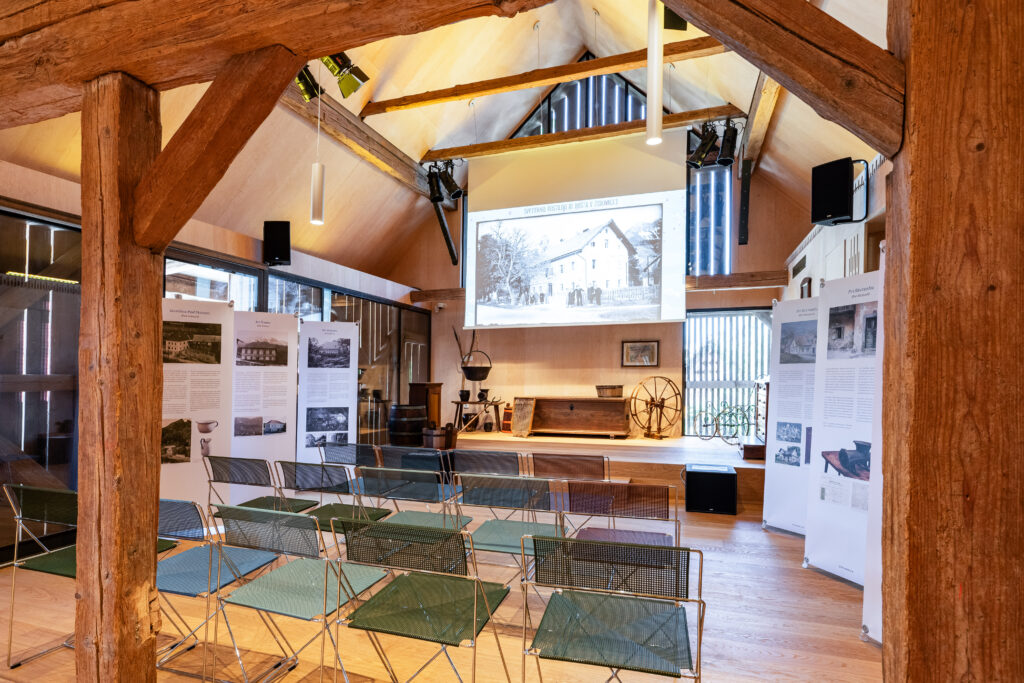
In the summer of 2026, together with my colleague Rok Humerca and a wonderful group of local people, we created an exhibition called Hiše, ki pomnijo – Houses That Remember, presented in the newly renovated farm building next to Prešeren’s Birth House in Vrba. Somehow, it became one of the most personal heritage projects I have ever worked on.
This time we weren’t researching famous houses. We were looking at the other ones. The houses we pass every day. The ones without ticket offices, museum shops or carefully written interpretation panels. Houses that are simply there – sometimes still inhabited, sometimes abandoned, sometimes changed almost beyond recognition.
We selected seven. Not necessarily because they were the oldest or architecturally most important, but because every time we started digging, another story appeared.
And some of those stories were simply too good to leave behind.
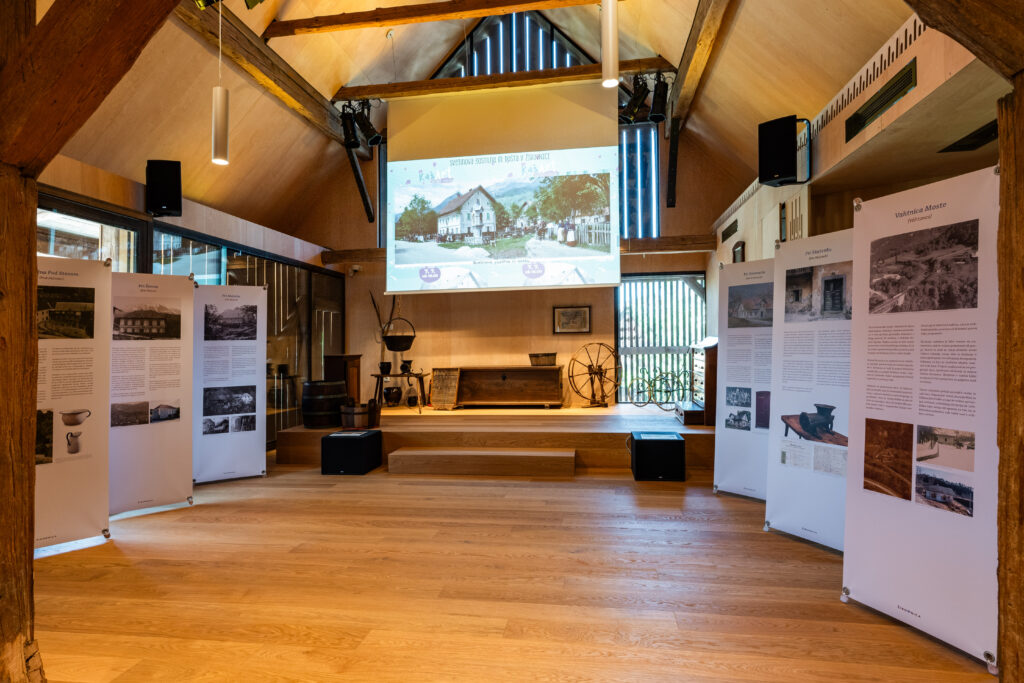
Seven houses. Seven stories.
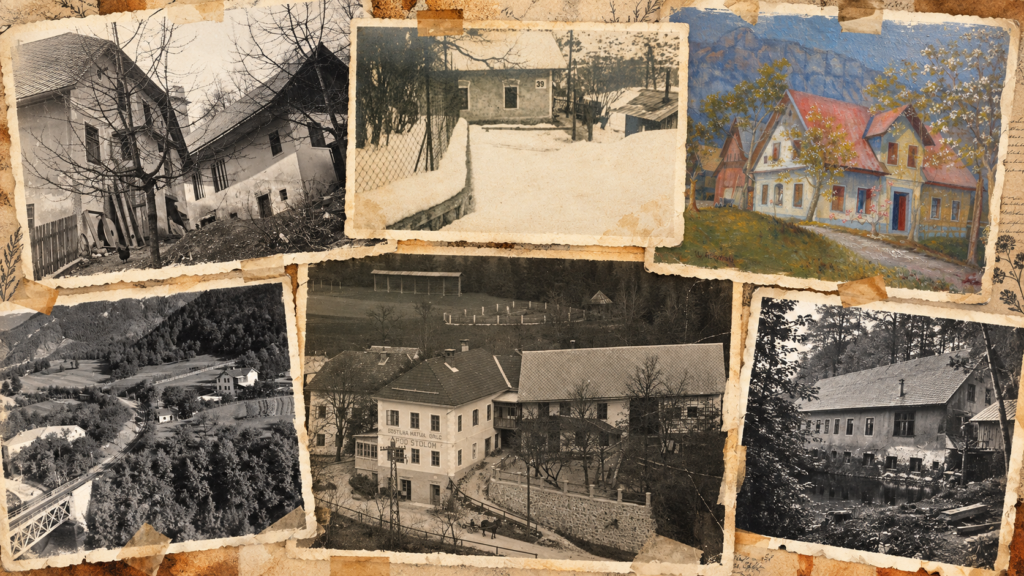
There is a tiny abandoned railway watch house in Moste, probably built around the time the railway arrived here in the final decades of the Austro-Hungarian Empire. I love this little house. France Prešeren famously wrote poem about the Železna cesta – the iron road – and all the possibilities it would bring: travel, movement, new places, perhaps even a certain kind of freedom. When he wrote about it, the railway hadn’t even reached this part of Slovenia yet.
A few decades later it did. Trains began running through Moste and beside the tracks stood this tiny house, where a railway guard lived with his family and watched the modern world pass by. For me, this modest building somehow embodies everything the railway promised: movement, possibility and a suddenly much larger world.
The trains still pass today. The little house is still there too – but sadly, slowly disappearing.

Then there is the house pri Kramarju in Zabreznica.
Wow.
Janez Finžgar, cousin of the writer Fran Saleški Finžgar, bought it from the well-known local merchant Kalan, who apparently liked gambling a little too much and eventually had to sell the property.
Already a good story.
But Janez himself had an even better one. During the First World War he ended up as a prisoner in Russia. Eventually he returned home.
On foot. From Russia.
I complain when my flight is delayed for two hours.
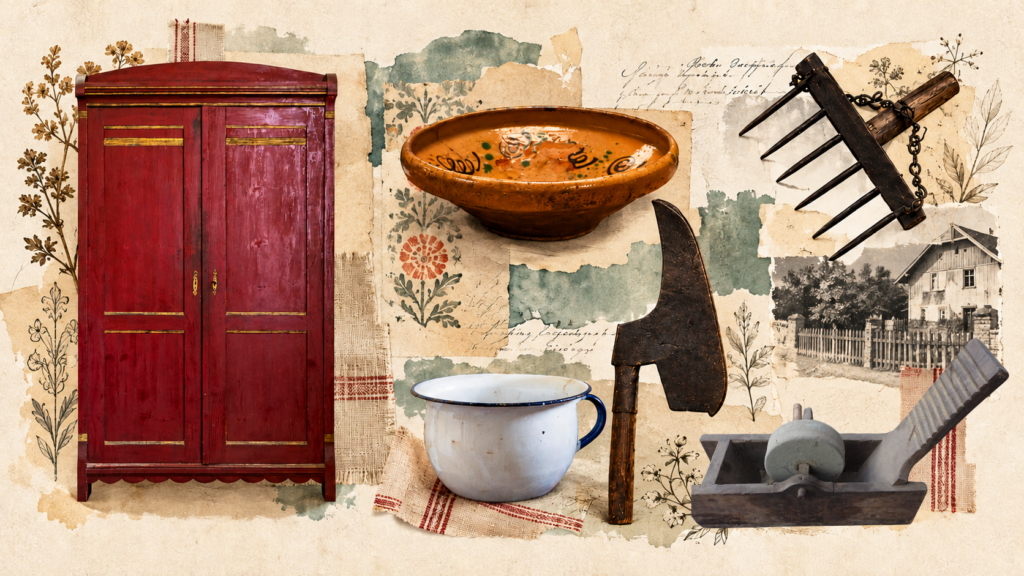
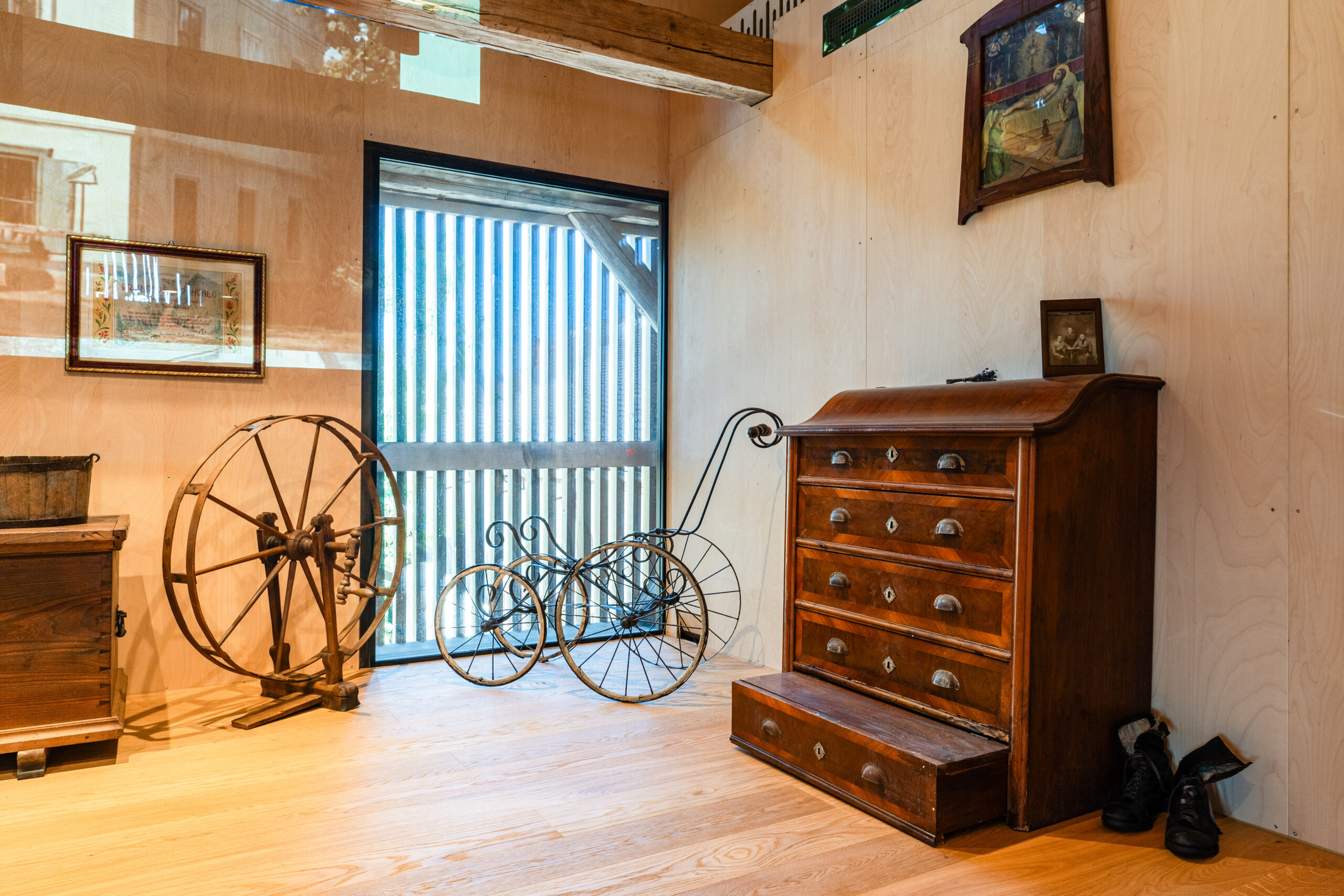
Back in Zabreznica, Janez lived in the house with his wife Frančiška. He was a firefighter, helped rescue people in the mountains and was also an exceptionally skilled carpenter. We know how skilled because some of the furniture he made survived, including beautiful painted wardrobes that became part of our exhibition.
I love moments like this. Suddenly Janez isn’t just a name in an archive or a face in an old photograph.
You can see his hands in the wood.
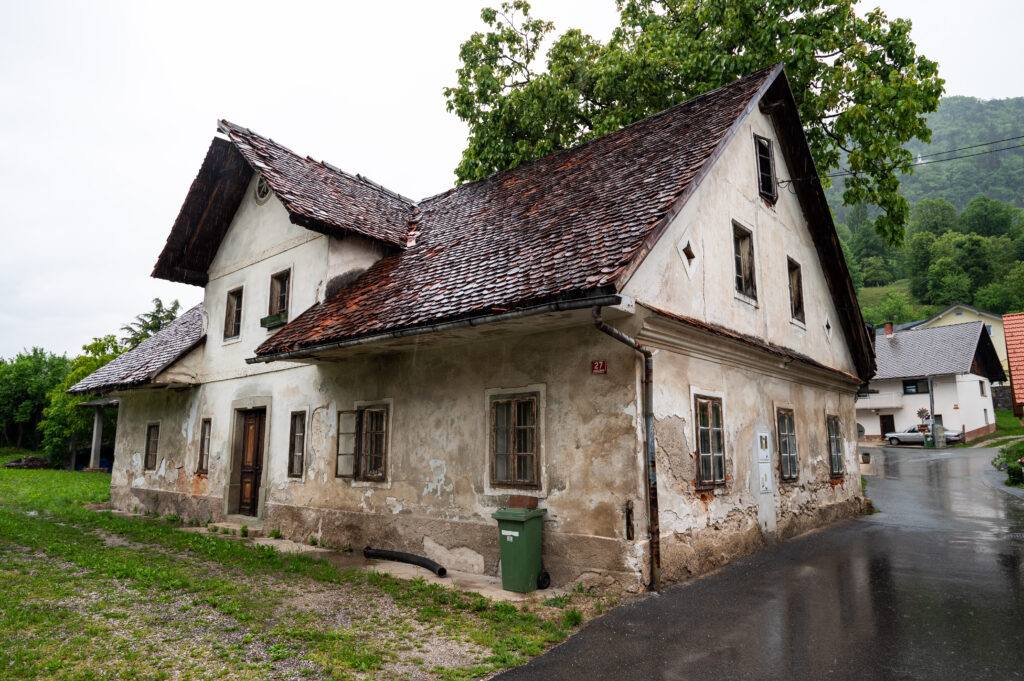
The house pri Skutenku in Moste tells another story. It is a large old farmhouse once connected with a successful sawmill that stood nearby. The sawmill is gone now, but the house survived. And then came photographs, documents, letters, family memories and objects.
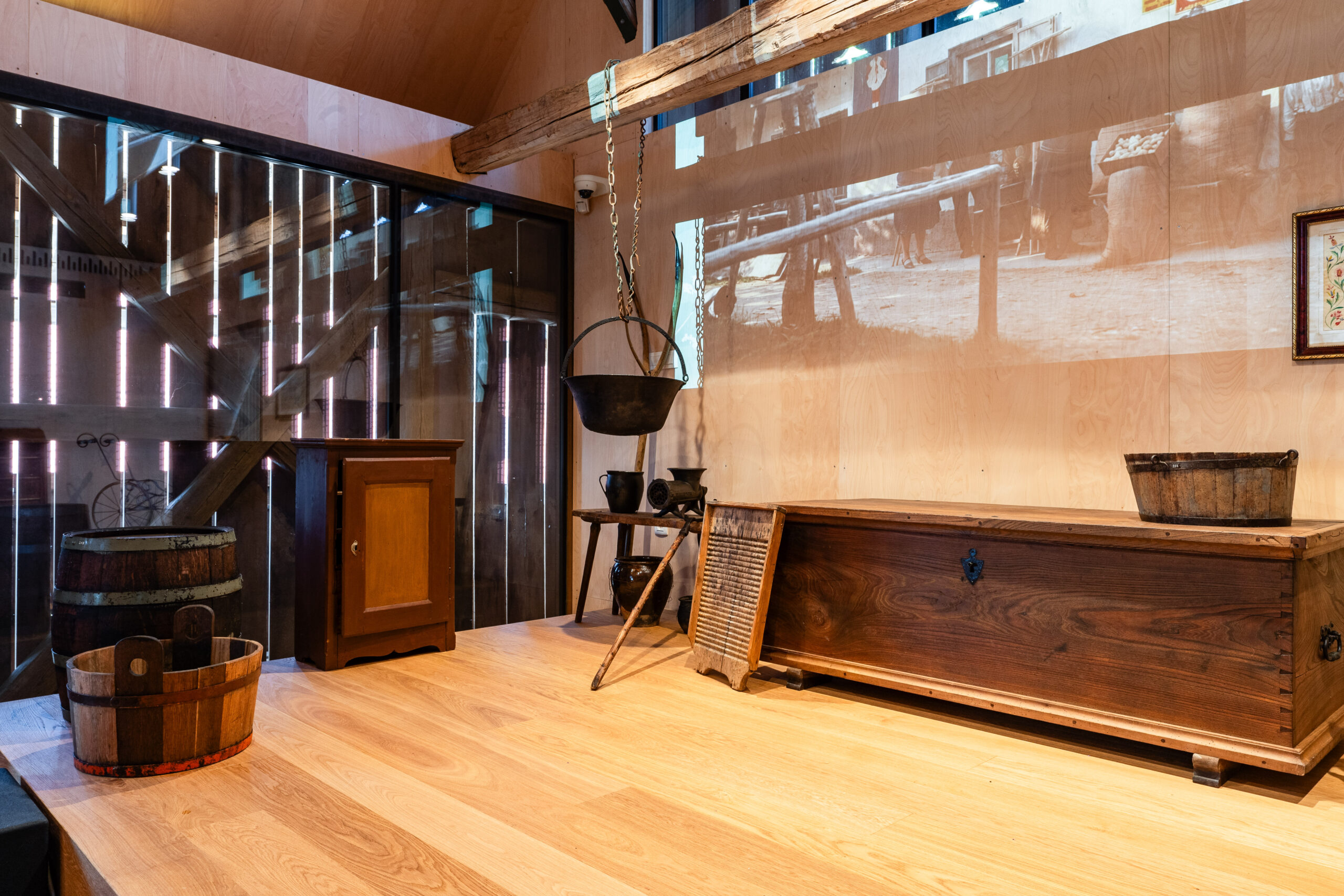
One of those objects became one of my favourites from the entire exhibition: a meat grinder attached to a milking stool.
Seriously.
Museum designers can spend thousands developing clever multifunctional installations. Someone in Moste simply needed somewhere to attach a meat grinder.
Problem solved.
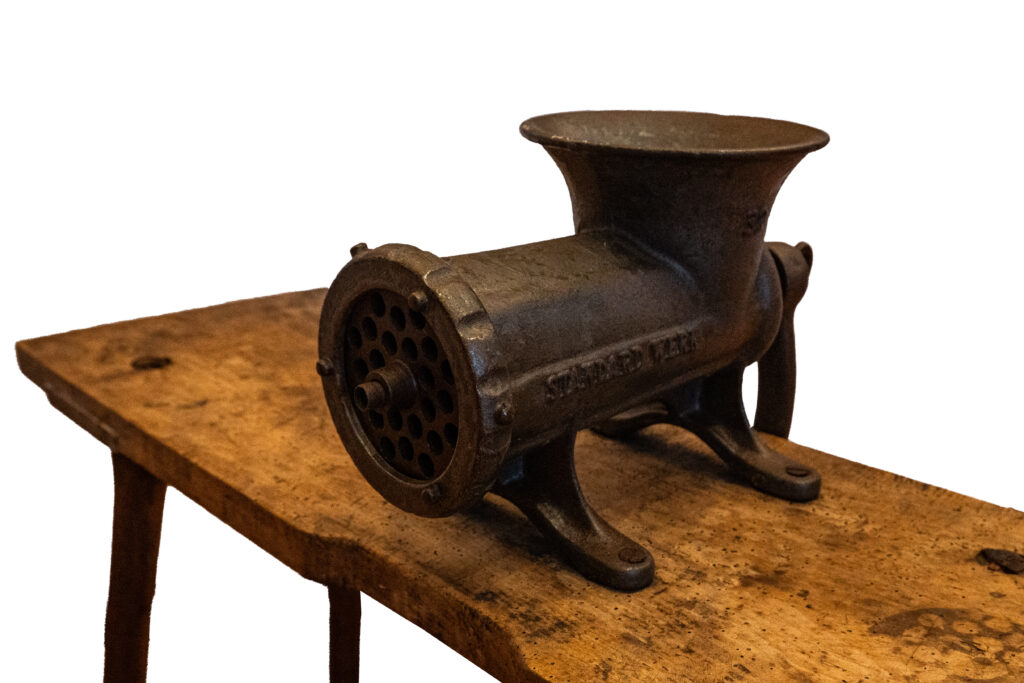
Behind the humour is something I genuinely love about old houses. Things were repaired, adapted and reused. Something made for one purpose quietly acquired another life. Nothing spectacular. Just everyday human ingenuity.
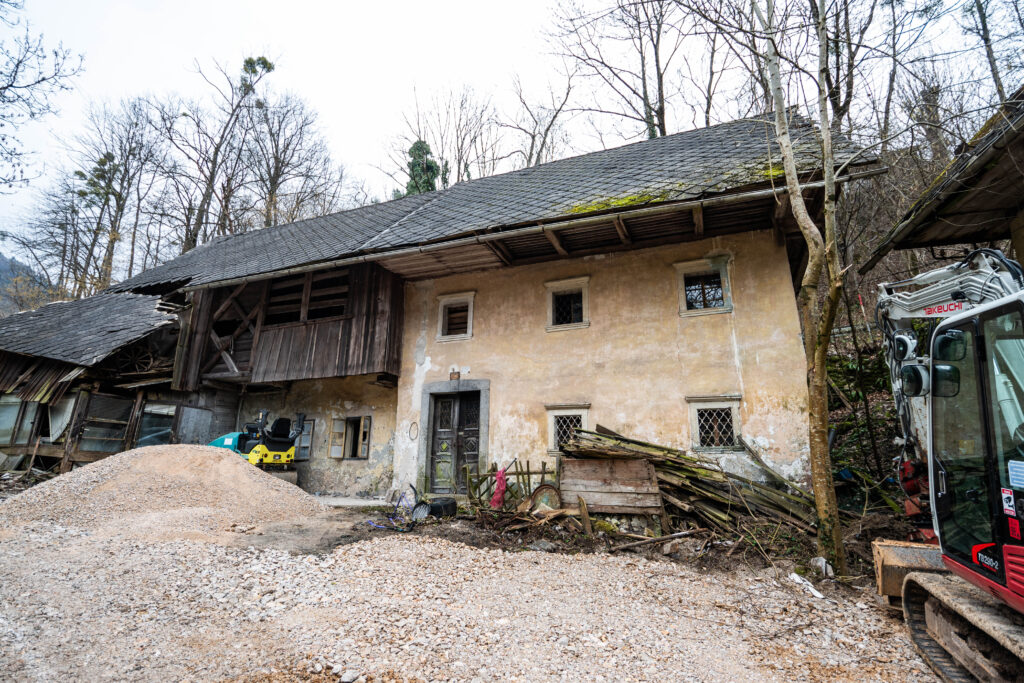
At pri Šimnu, things get musical. The house was built in 1902 and still preserves beautiful historic details – old doors, stone architectural elements and even a Secession-style painted ceiling.
But there is another reason I love it. This is the house where Slovenian singer-songwriter Aleksander Mežek grew up – and where he still lives today.
Rock’n’roll meets local heritage.
This is precisely the kind of connection I love because heritage doesn’t conveniently stop somewhere around 1900. Houses continue collecting stories. One generation runs an inn, another opens a shop, somebody cuts hair there, and eventually a boy grows up in the same house and becomes one of Slovenia’s best-known singer-songwriters.
Same house. Different stories.
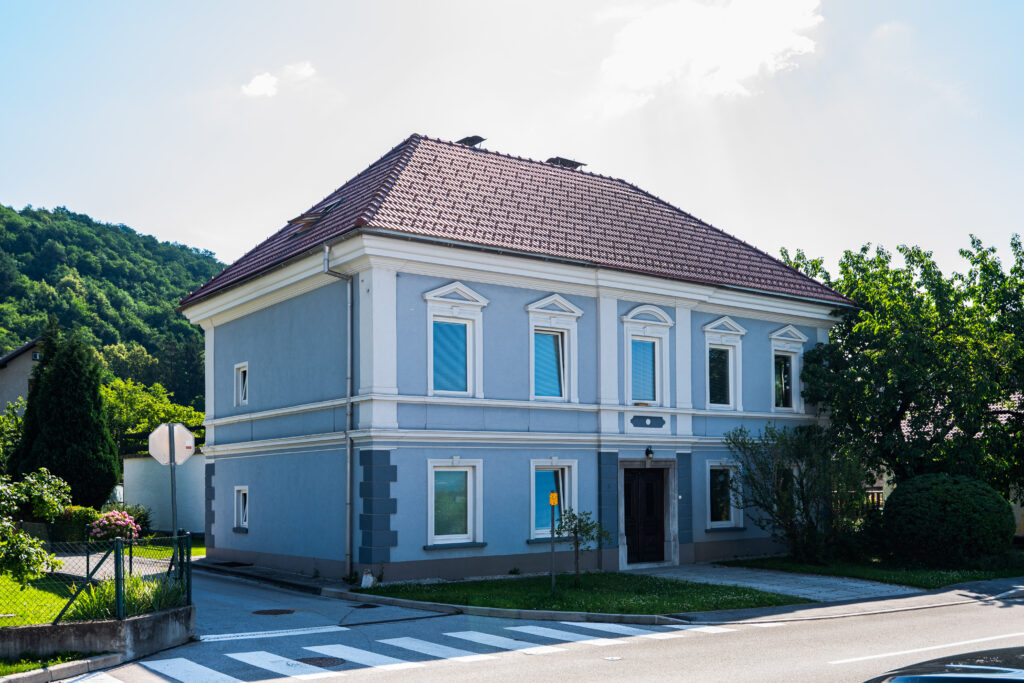
At the house pri Anžovcu in Zabreznica, the story that caught me was quieter. Herman Rakar was a cooper. After the Second World War he made barrels, wooden tubs, buckets and other objects that were once part of everyday rural life. Some of his tools survived. So did some of the things he made.
An old wooden barrel may not seem particularly exciting until you realise that almost nobody knows how to make one anymore. Then it becomes something else.
Evidence of knowledge.
Knowledge that existed not in books, but in hands.
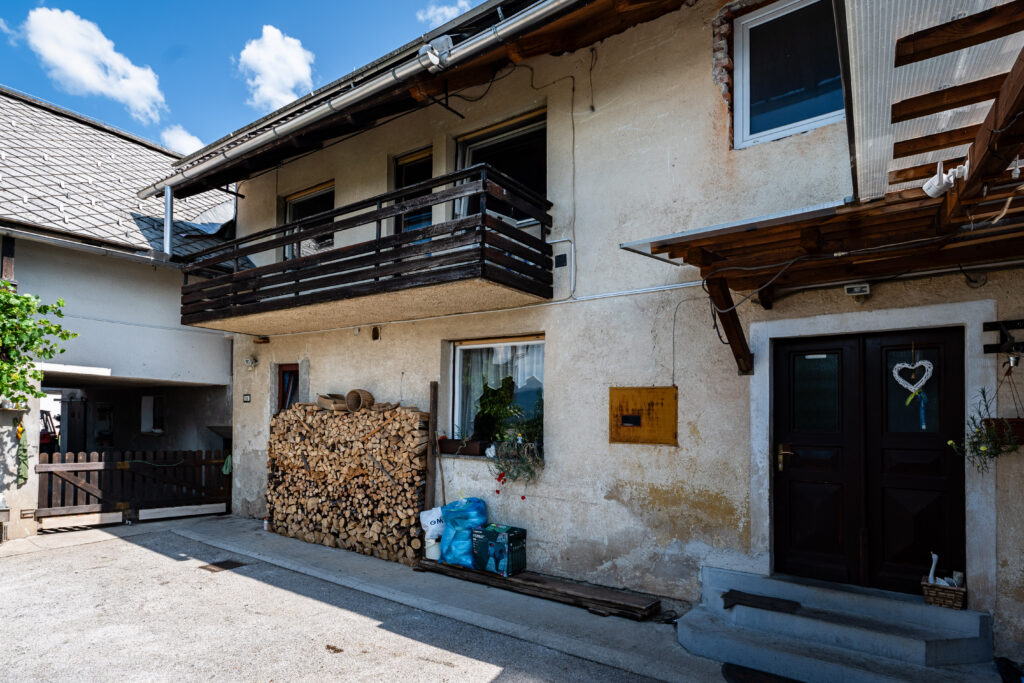
The house pri Matuhu revealed an entirely different world. Beside the Završnica stream there was ironworking, later a mill and eventually a sawmill. What today looks like a quiet landscape was once a working landscape, powered by water, wood and human labour. A Venetian-type sawmill established here in the 20th century continued operating into the 1990s and survives as the last historic sawmill of its type in the municipality.
I must have passed this place countless times without really seeing it.
Perhaps that is one of the things heritage research does best: it teaches you to look again.

And finally there is the old Pod Stolom inn in Moste.
This one is about roads.
For generations the inn stood beside the old regional road. Carters stopped here with their horses. Travellers ate, drank and slept here. There were guest rooms, stables, an icehouse and a garden.
Imagine the noise. Horses outside, glasses inside, people arriving from somewhere and leaving for somewhere else.
Then the world changed. The road was realigned in the 1970s. Later came the motorway. Traffic moved elsewhere, and a place whose existence had depended on people passing by suddenly found itself away from the flow. The inn finally closed in 1997.
The building didn’t move.
The world moved around it.
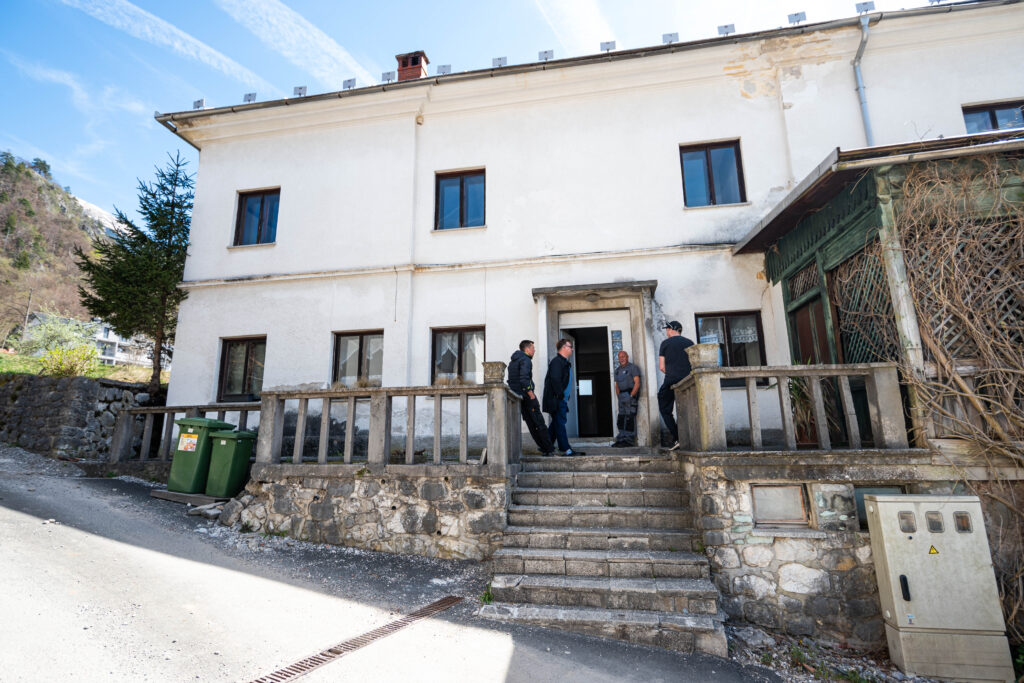
Knocking on doors
That is really how the exhibition came together. Not through one spectacular archival discovery, but through dozens of small ones. We talked to people. They opened cupboards, attics and old family albums. Someone remembered a name. Someone else knew who had made an object. A photograph appeared, then a document, then another story.
And then the objects started arriving.
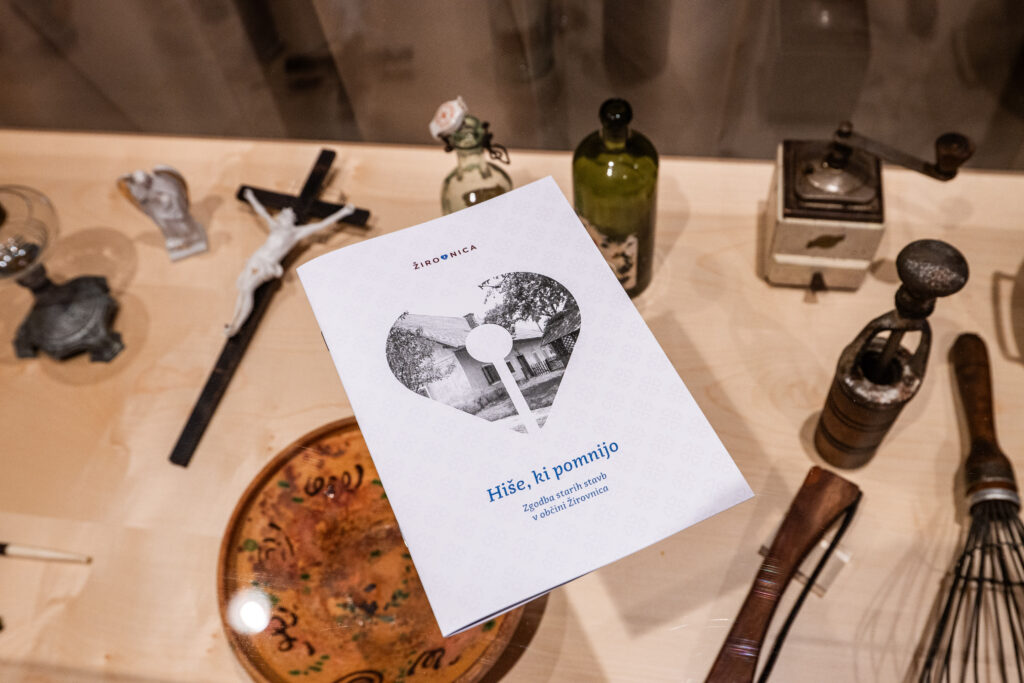
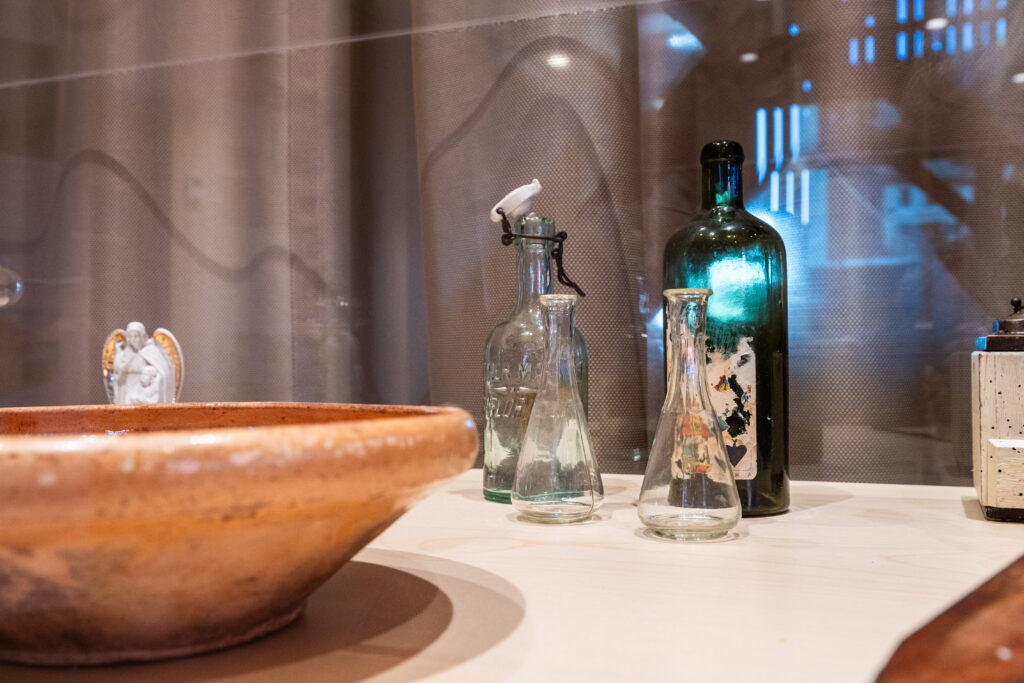
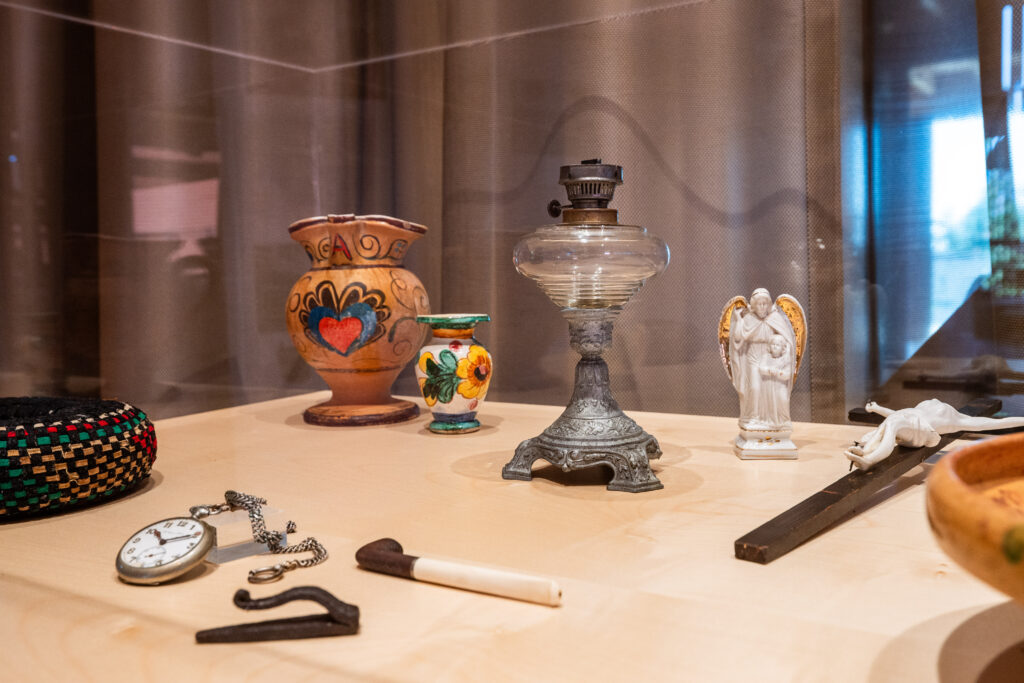
Furniture made by Janez Finžgar. Cooper’s tools and wooden vessels from pri Anžovcu. Bottles, kitchen utensils and other objects from the Pod Stolom inn. A railway lamp from the watch house. A crucifix, old textiles, barrels, tools, photographs, letters and everyday household objects.
And, of course, that magnificent meat grinder attached to a milking stool.
This became another important part of the exhibition for me. These weren’t objects collected because somebody had decided decades ago that they were museum-worthy. Many had simply survived because somebody had kept them. In a house. In an attic. In a cupboard.
Some needed a little more love after decades of use and storage. That was where Anja Bunderla, our restorer, came in. Aleš Košir photographed the houses and objects, while Rok Humerca and yours truly, Matjaž Koman, became the researchers, knocking on doors, following archival trails, talking to owners and local residents and slowly trying to put all those fragments back together.
Our friend Janez Dolžan contributed historical photographs and turned some of them into short moving films. Suddenly, old houses and people came alive again. A little time machine into the past.
Somewhere during all this, the four of us started calling ourselves the Heritage Hunters.
It started partly as a joke. Then it somehow stopped being one.
But that’s a story for another blog.
Who decides which house deserves to be remembered?
Slowly these seven houses stopped being buildings. They became people: Janez walking home from Russia, Herman making barrels, a railway guard watching trains, workers at a sawmill, carters drinking at Pod Stolom and a young Aleksander Mežek growing up in an old house in Moste.
And somewhere along the way I kept returning to the same question.
Who decides which house deserves to be remembered?
Some houses become museums. Some become protected monuments. Some are beautifully restored. Others simply grow old. Their owners die, families move away, roofs begin to leak, windows are replaced and rooms are remodelled.
None of that is necessarily wrong. Houses are living things.
But somewhere in that process, stories disappear.
And once the last person who remembers why that strange door is there, who made that cupboard or who slept in the room upstairs is gone, recovering that knowledge becomes incredibly difficult.
I don’t think every old house should become a museum.
God forbid.
We House Museum Nerds would never get home.
But perhaps every old house deserves at least one moment when somebody stops in front of it and asks: What happened here?
The exhibition Hiše, ki pomnijo – Houses That Remember was our attempt to ask that question about seven houses in Žirovnica.
We didn’t really discover them. The community already knew them.
We simply started listening.

Soundtrack: Aleksander Mežek – Siva pot
There couldn’t really be another song. Aleksander grew up pri Šimnu, later built part of his musical career in London, and even John Denver liked Mežek’s Slovenian version of Take Me Home, Country Roads enough to let him share the songwriting credit. And at the opening of Houses That Remember, Aleksander played Siva pot himself.
Leaving. Returning. Home. Perfect.
More Information about exhibition Houses That Remember
Exhibition catalogue: Download PDF
Photos: Aleš Košir / House Museum Nerd
Text: Matjaž Koman / House Museum Nerd
This post is part of the Ultimate House Museum Guide for Nerds – a personal project exploring the beauty, strangeness and magic of house museums around the world.