

When Contemporary Art Enters a House Museum: Andrej Jemec in Čop’s Birth House
Andrej Jemec’s exhibition in Čop’s Birth House shows how contemporary art can live inside a historic house museum in Slovenia.
This post isn’t really about Čop’s Birth House.
You can read about it here.
No — this one is about something else.
About colour, rhythm, and how heritage sometimes breathes through art.
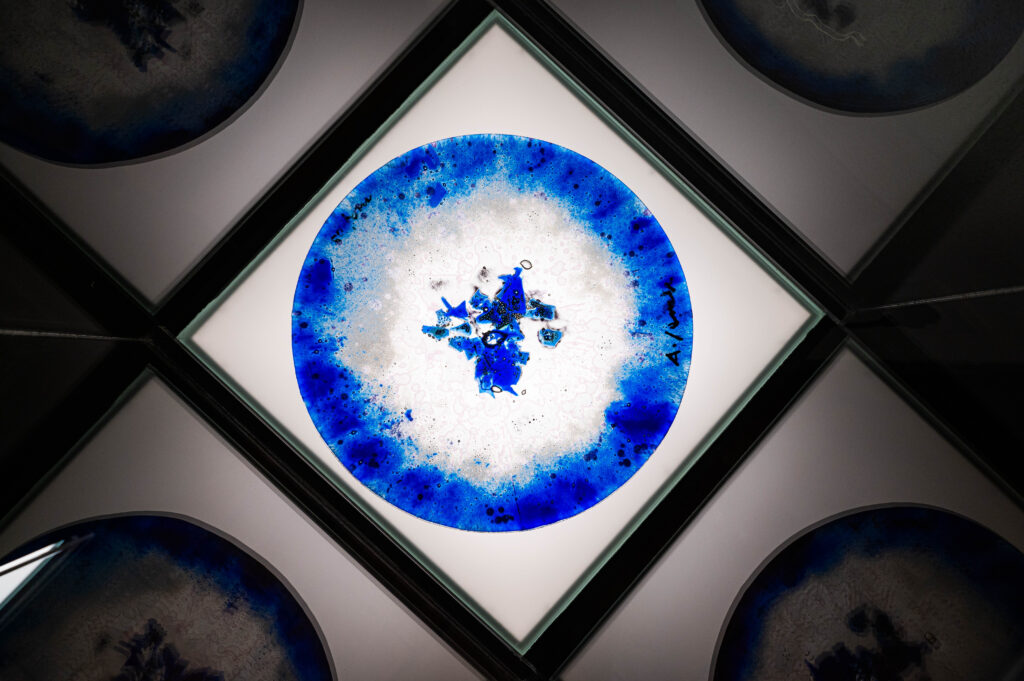
We recently opened the exhibition “The Language of Colour / The Speech of Images” in Čop’s Birth House — a collaboration with Andrej Jemec, one of Slovenia’s leading abstract painters.
Yes, he’s from the next village over.
A neighbour.
But also a world citizen — exhibiting from Tokyo to New York, from the Venice Biennale to MoMA and Tate.
And yet, he said yes when we invited him to show his works in a tiny historic house.
No fancy museum, no white cube.
Just Čop’s Birth House — rooms filled with books, memories, and the quiet spirit of the 19th century.
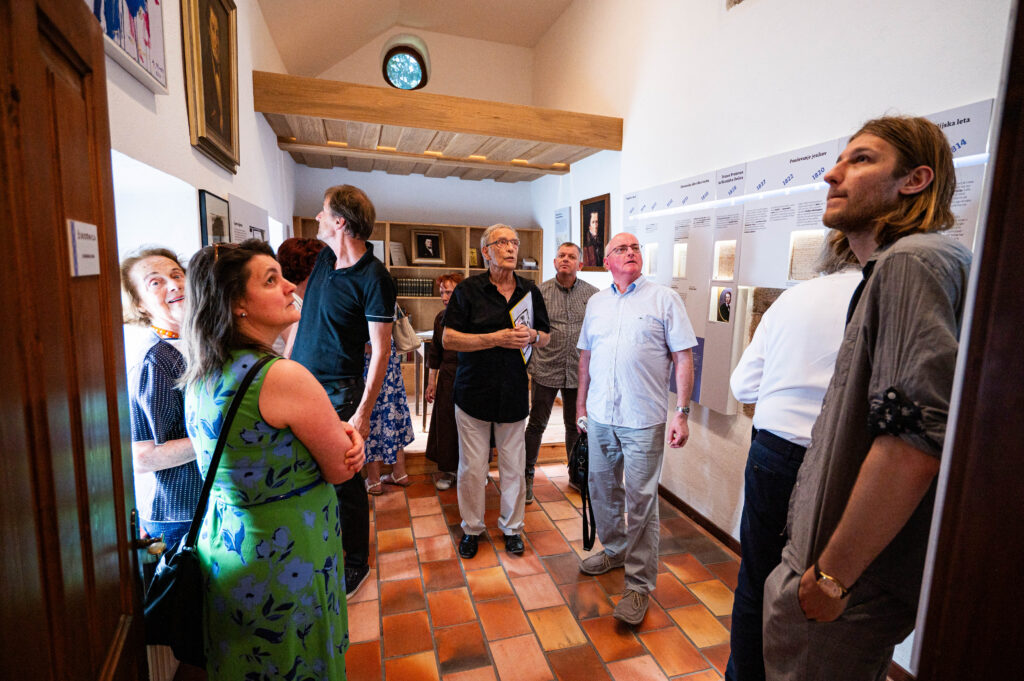
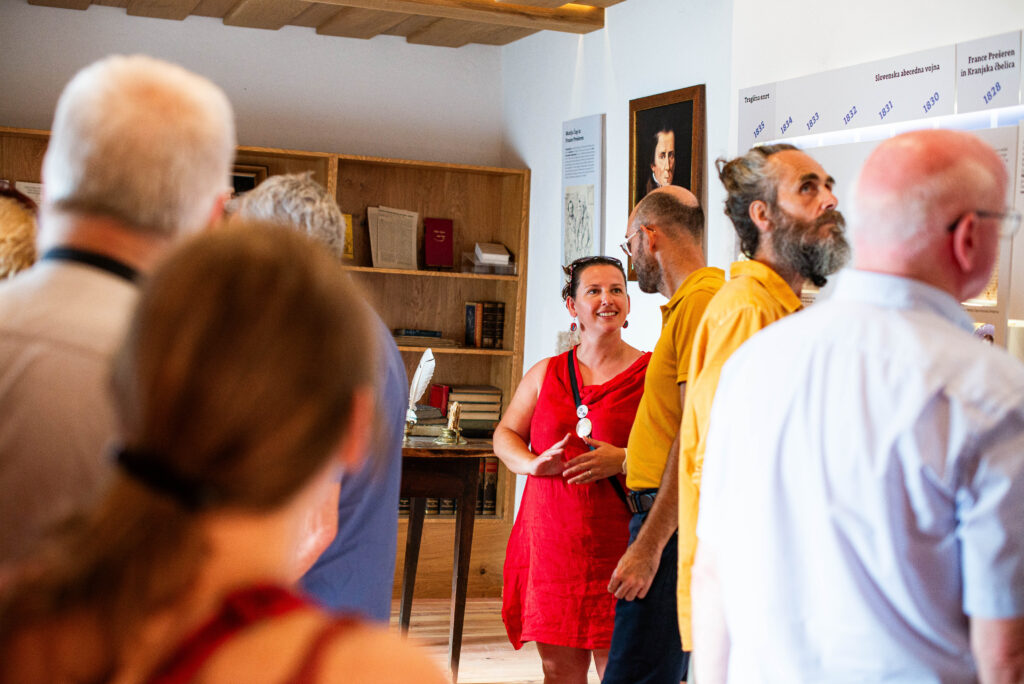
We didn’t want a big, spectacular exhibition.
We wanted a dialogue — between Jemec’s abstract forms and Čop’s linguistic world.
Between past and present.
Between colour and language.
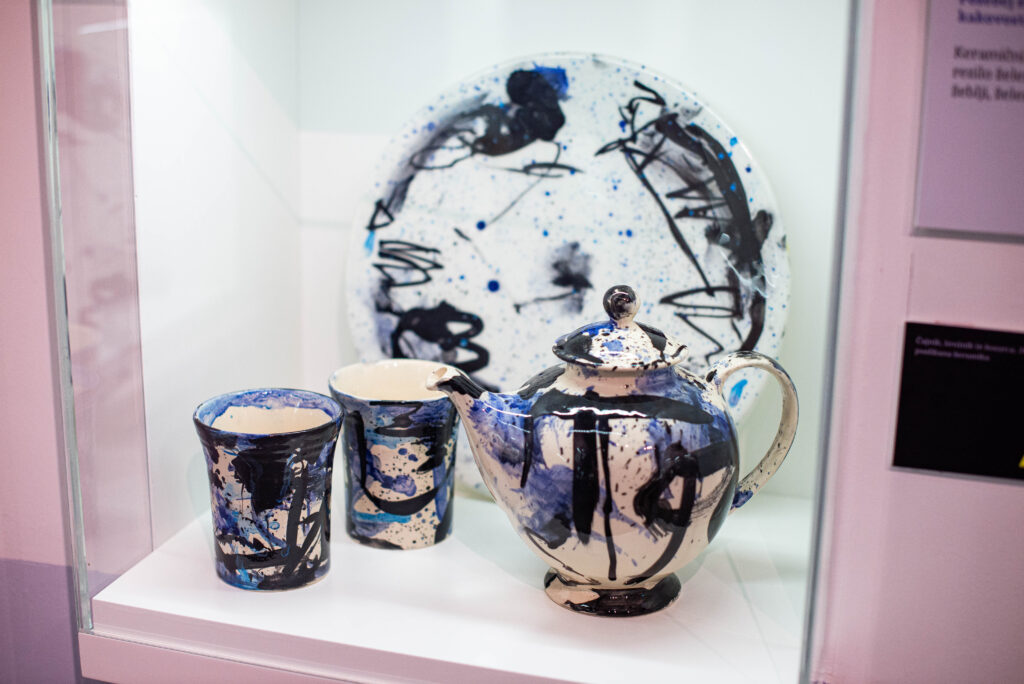
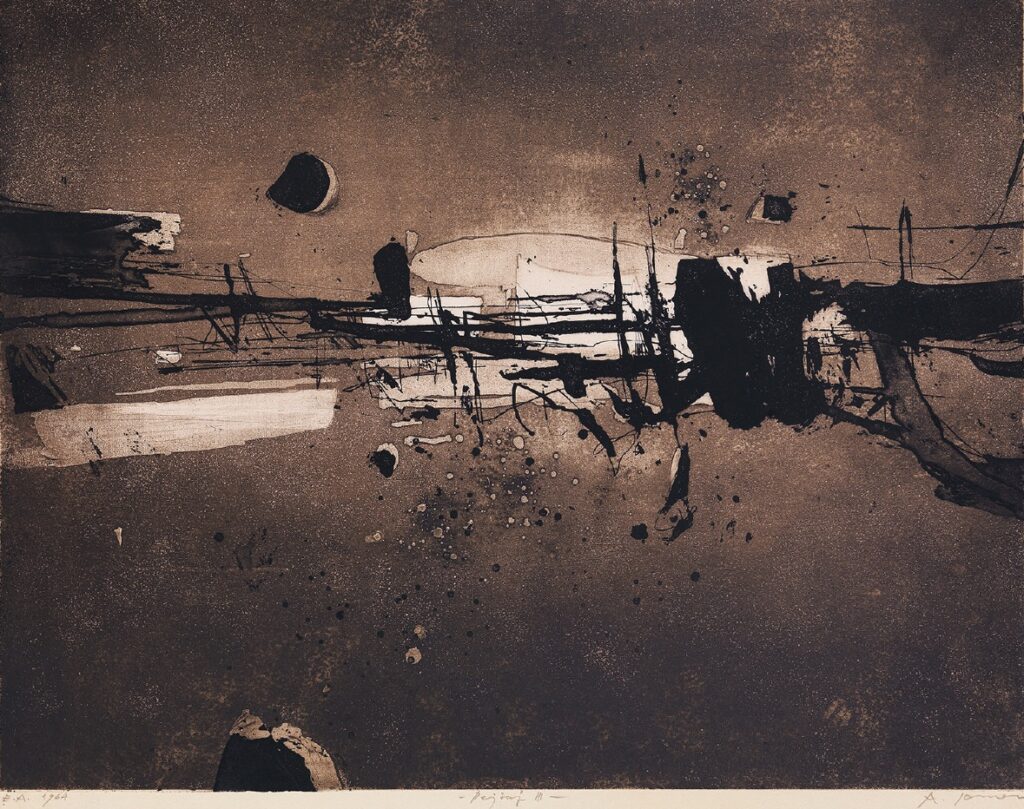
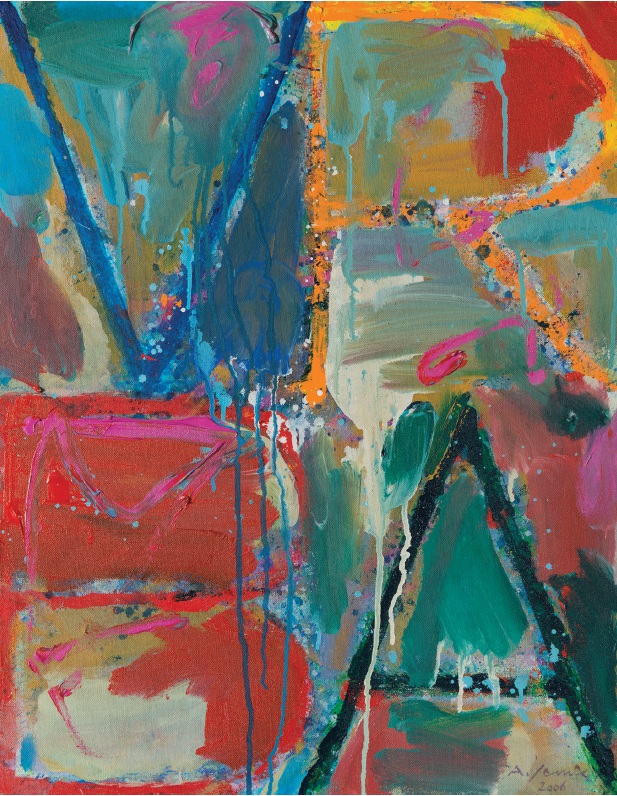
Jemec’s graphic works from the 1960s, 70s, and 90s — some award-winning in Tokyo and Venice — were joined by his ceramic and glass pieces, shimmering like visual poems.
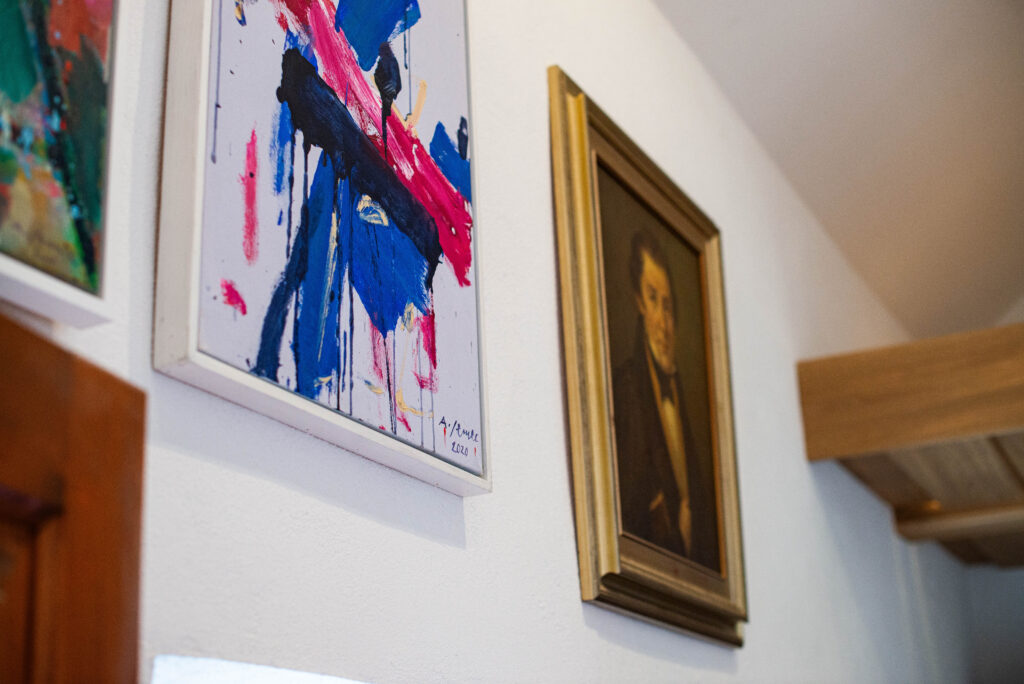
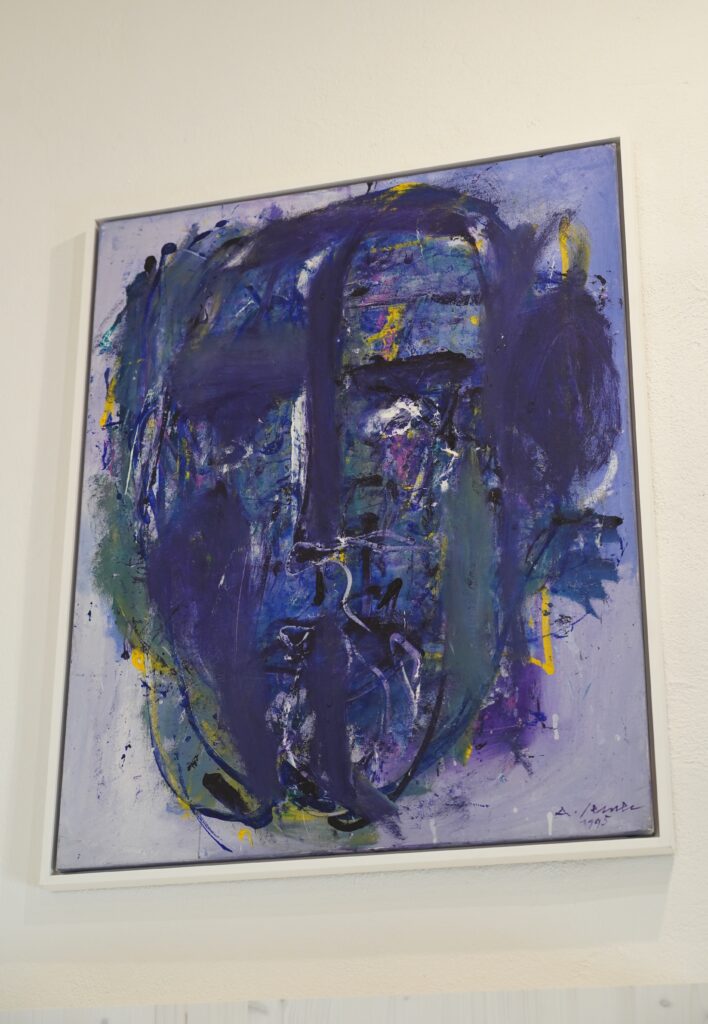
In Čop’s memorial room, we placed a painting titled To the Poet (1990).
The face on the canvas, almost by coincidence, resembles Matija Čop himself — a poetic loop between centuries.
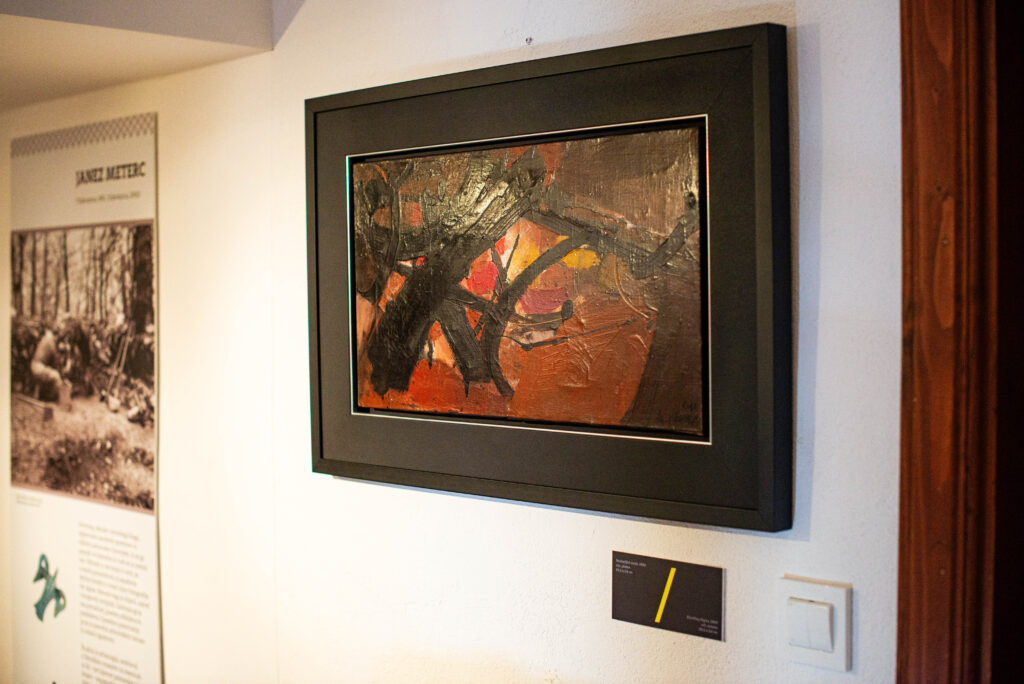
The ceramics displayed in the Ajdna Room are no coincidence either.
Archaeologists found pottery from the 5th century on Ajdna Hill above Žirovnica — a reminder that form, clay, and creativity have always lived here.
The connection between ancient hands and Jemec’s brush is more than symbolic.
It’s alive.
Why so many graphics?
Because Matija Čop loved books, letters, languages.
Printed thoughts.
And Jemec, in his own way, paints what words can’t say.
Where Čop collected meaning through text, Jemec finds it in colour.
Žirovnica is small.
We don’t have an art museum.
But we do have houses — full of stories. Prešeren’s Birth House, Finžgar’s Birth House etc.
And we believe that heritage isn’t just about great names from the past.
It’s also about giving space to living artists, those who keep asking questions, searching for new forms of expression.
There’s also a beautiful continuity here.
Another native of Žirovnica, Zoran Kržišnik, was the legendary director of the Moderna galerija in Ljubljana.
He led the Ljubljana Graphic School and brought Slovenian art onto the global stage — from Tokyo to London.
Among his artists? Andrej Jemec.
So this exhibition isn’t only about one artist.
It’s about a lineage — of openness, curiosity, and artistic innovation.
A reminder that art, like heritage, never truly stands still.
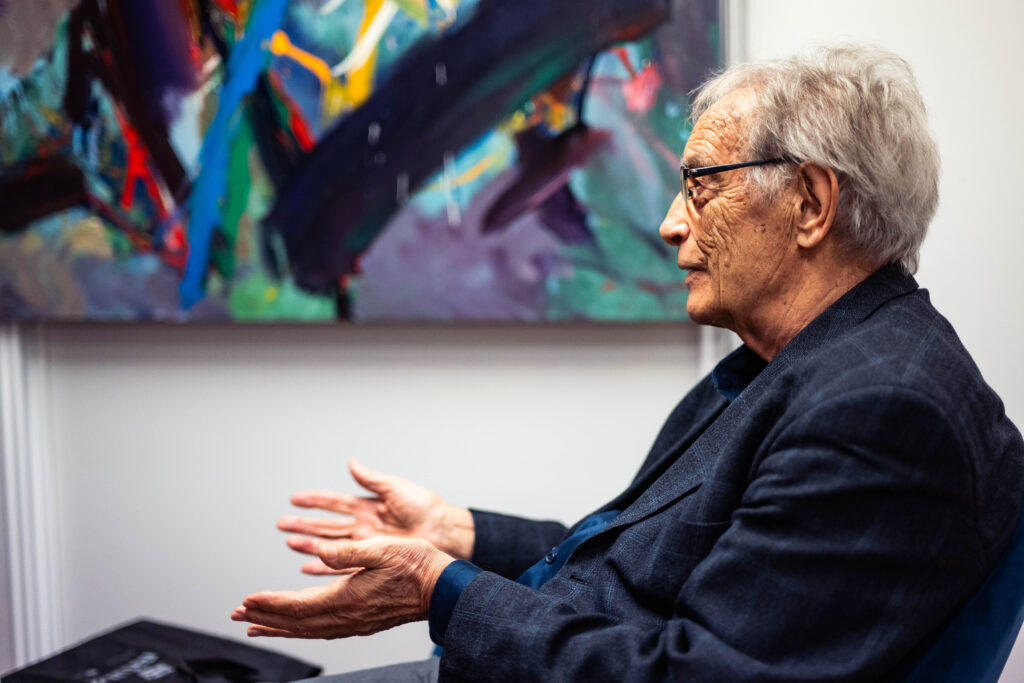
As they say, a picture speaks a thousand words —
and perhaps a video speaks even more.
So we made a short film, a simple documentary about this collaboration:
a house, an artist, and the ongoing conversation between memory and creation.
And for you, my fellow house museum nerds — the film takes you one step further.
We visit Andrej Jemec’s home.
He walks us through his studio, shows us his personal collection,
and shares a quiet conversation at his kitchen table.
A rare glimpse into the everyday life of an artist whose colours still speak the language of our landscape.
Because the past is not a closed book.
Sometimes, it’s a living layer —
waiting for a brushstroke to wake it up again.
Soundtrack: Ryuichi Sakamoto – Energy Flow
Because sometimes, heritage doesn’t speak in words —
it breathes in colour, rhythm, and quiet energy.
More Information about the exhibition in Čop’s Birth House “The Language of Colour / The Speech of Images”
Official website: Čopova rojstna hiša – Čop’s Birth House \ Andrej Jemec’s The Language of Colour / The Speech of Images \ Andrej Jemec
Photos: Aleš Košir
Text: Matjaž Koman / House Museum Nerd
This post is part of the Ultimate House Museum Guide for Nerds – a personal project exploring the beauty, strangeness and magic of house museums around the world.